What October Does to Fresh Hardwood Finish And Why Most Contractors Don't Warn You
Most homeowners assume the hardest part of refinishing is behind them the moment the crew packs up. The floors look beautiful. The dust is gone. The smell has faded. Then October arrives in Connecticut, and work that wasn't given the right conditions to cure starts showing it, quietly, over days, in ways that are easy to misread until starting over is the only option left.
If you've been researching hardwood floor sanding and refinishing CT contractors this fall, the timing question matters more than most refinishing content lets on. The concern isn't just whether to schedule before winter. It's what happens to a fresh finish during the two to four weeks after the work is done, when humidity in a Connecticut home can shift fifteen to twenty points between a warm afternoon and a cold morning.
Fresh Finish Is Not Cured Finish, and October Closes That Gap Fast
A floor looks dry within hours of the final coat going down. That appearance is not finish cure. It is surface hardening. The chemistry still active beneath that surface layer requires stable temperature and stable humidity to complete. When both fluctuate, which they do in New England every October without fail, the finish film is still elastic enough to telegraph the movement of the wood beneath it.
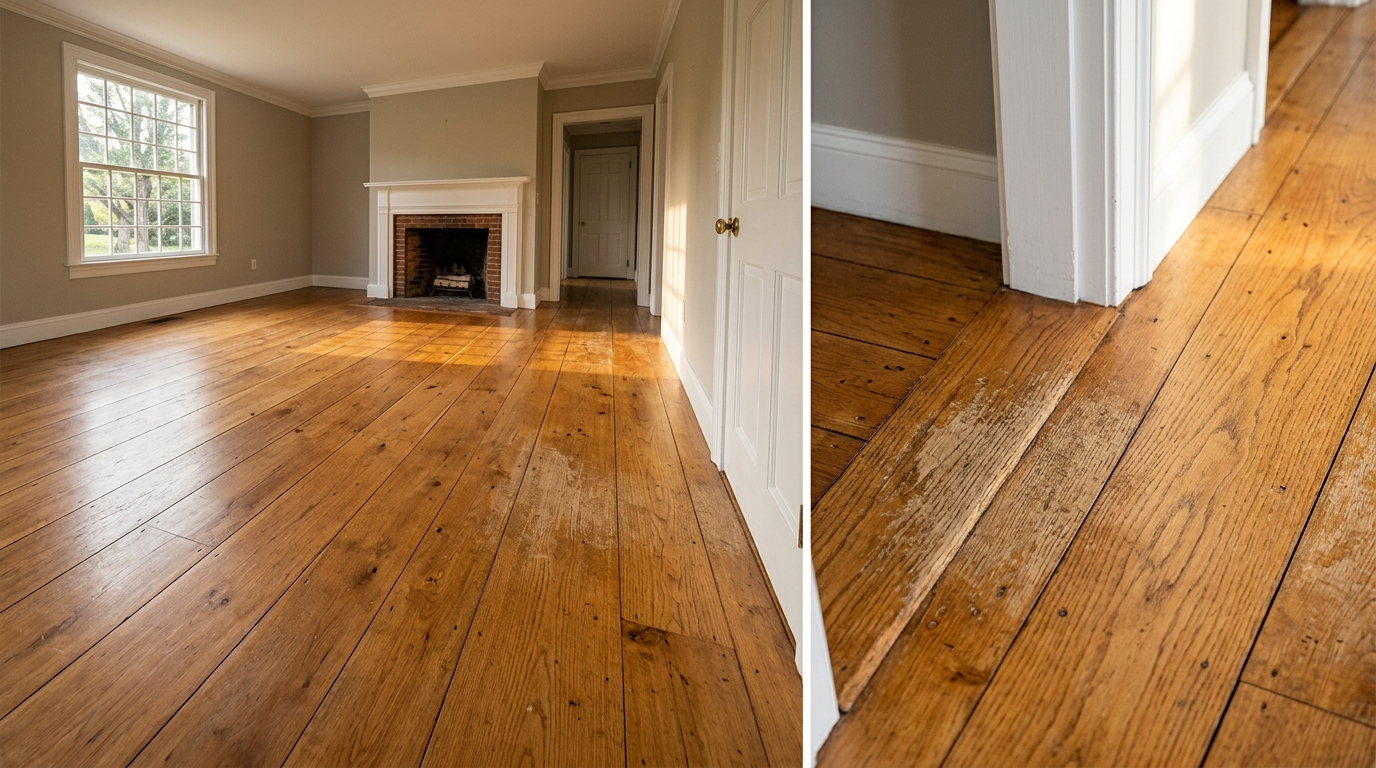
Wood expands when it absorbs moisture and contracts when it releases it. In a finished floor, that movement is normal and expected over the life of the floor. The problem is timing. During the cure window, the bond between the finish film and the wood surface is still forming. Stress it with rapid wood movement and the result is micro-fracturing in the finish layer. That shows as clouding, checking along board edges, or in severe cases, peeling at seams where two boards moved in opposite directions.
Why Connecticut's Fall Weather Is the Specific Condition to Watch
Connecticut's shoreline towns, Guilford, Madison, Clinton, Old Lyme, Branford, sit close enough to Long Island Sound that fall humidity does not drop cleanly or predictably. An Indian summer week pushes relative humidity into the 60s and 70s. Then a cold front arrives, the heat kicks on for the first time, and indoor humidity can drop to 30 percent within 48 hours as forced-air systems run without humidifiers keeping pace.
That swing is what creates finish problems. Not high humidity alone. Not low humidity alone. The rate of change is the culprit, and fall delivers it faster than any other season. The wood responds. If the finish hasn't fully cured, it responds too, in ways the finish cannot absorb gracefully.
We regularly see floors that were refinished in mid-October by contractors who didn't account for this. The work looked flawless on day one. By Thanksgiving, the homeowner is calling about finish cloudiness in the center of boards or hairline cracking at joints. The finish itself was fine. The curing conditions were not, and those two things are inseparable.
How a Skilled Contractor Controls the Curing Environment
The answer to fall refinishing isn't to wait until spring. It's to manage the interior environment actively during the cure window.
Keep indoor humidity between 35 and 55 percent for a minimum of two weeks after the final coat. A dehumidifier or humidifier, depending on conditions, should be running and monitored. This is not optional advice. It is the condition under which the finish chemistry completes correctly.
Keep the HVAC from cycling dramatically. If the heat is coming on for the first time that season, the house needs to stabilize before the crew works and stay stable after. A contractor who schedules finish coats on a day when a cold front is forecast for that evening is cutting corners the homeowner will pay for later.
Choose the right finish formulation for the season. Water-based finishes and oil-modified polyurethanes respond differently to humidity during cure. As BONA Certified Craftsmen, we select finish products and formulations based on actual site conditions, not habit or whatever is in the truck.
Understanding how finish chemistry works in different humidity conditions goes deeper than most guides explain. Our post on hardwood floor finishes: science and protection covers the formulation differences that matter for Connecticut homeowners.
The Finish Type You Choose Now Changes How the Floor Survives Every Fall After This One
This is worth knowing before the refinishing conversation ever starts. Oil-modified polyurethane finishes cure more slowly than water-based finishes, but once fully cured, they flex slightly with wood movement rather than fracture. Water-based finishes cure faster and run lower-odor, which is a real advantage when you're living in the home during the project.
Neither finish type is universally better. The right choice depends on species, existing finish system, and the conditions in your specific home. Our full breakdown on oil vs. polyurethane finishes walks through what each formula actually does once it's on the floor.
What Homeowners Ask Before Booking a Fall Refinishing Job
My contractor says my floors just need more time to cure. How do I know if that's true or if something went wrong?
This is the right question to ask, and most homeowners are afraid to push on it. A finish showing slight tackiness or surface softness at the one-week mark may genuinely need more time in stable conditions. A finish showing cloudiness, edge cracking, or peeling is a different situation entirely. The distinction matters because one resolves on its own and one does not. If you are unsure which category your floor falls into, a second opinion from a credentialed professional is worth the call before more time passes.
I just had my floors refinished two weeks ago and I'm seeing faint cloudiness near the windows. Is this the finish failing?
Cloudiness near windows after a recent refinish almost always points to a moisture problem: humidity spiked during the cure window, or a window was left open during rain in the first week. Whether this resolves with a light buff and recoat or requires stripping and redoing the section depends on how deep the damage sits in the finish system. Call us and describe what you're seeing before assuming the worst.
Can I refinish floors in October or should I wait until spring?
October is workable with the right preparation and environmental controls. November becomes harder as heating systems run continuously and interior humidity drops without humidification. If your project can start in September or early October with two stable curing weeks in the forecast, move forward. If you're looking at a late-October or November start, a conversation about spring scheduling is worth having honestly.
Does the dustless refinishing process work the same way in fall?
Yes. Our dustless process controls particulates during sanding regardless of season. The humidity management protocols around curing apply the same way. The two systems are independent of each other. If you want to understand the full process before booking, our hardwood floor refinishing guide covers what happens from the first sanding pass through the final coat.
Schedule Now or Know Exactly What You're Waiting For
AGW Hardwood Floors has been doing this work since 1961. We hold Connecticut Home Improvement Contractors License #0630350, and our crews are BONA Certified Craftsmen and NWFA trained installers. The 300-plus five-star reviews we've earned reflect one standard applied consistently across every job: the work has to last, not just look good on day one.
Fall refinishing done right produces beautiful, durable floors. Fall refinishing done without attention to curing conditions produces callbacks. We do not take shortcuts on environment management, and we explain curing requirements to every homeowner before we leave the job.
Call us at (203) 640-3106 or schedule a free in-home estimate. We bring wood samples to you, assess the condition of your existing floors, and give you an honest recommendation on timing and product selection so you go into the project knowing exactly what to expect.
Serving Guilford, Madison, Clinton, Essex, Old Lyme, Branford, Wallingford, New Haven County, Middlesex County, and Springfield, MA.
Contact Us
Check out other hardwood flooring blogs from AGW: