The Floor Finish That Fails Every Connecticut Winter Starts Here
Here is the part most contractors skip when they tell you October is too late: the problem is not moisture creeping up from the ground. The problem is the heat coming down from your vents. The moment a Connecticut homeowner switches on forced-air heating in October or November, the interior environment shifts fast. Humidity drops, temperatures fluctuate room to room, and a freshly applied finish that needs stable conditions to cure properly gets neither. What you end up with is a floor that looks finished but is not fully hardened. It scratches on contact. It dulls before January. By February, it looks like nothing was ever done to it.
If you are searching for hardwood floor refinishing in Connecticut right now and it is already September, you are at the last viable window. Not because of some contractor rule of thumb, but because of how finish chemistry and your heating system interact during a New England autumn.
What Forced-Air Heat Does to a Finish Before It Cures
Waterborne polyurethane finishes, which represent the professional standard for indoor air quality and durability, require relative humidity in the 35 to 55 percent range and temperatures between 55 and 85 degrees Fahrenheit to cure correctly. During cure, the finish molecules cross-link and harden into a protective layer. Interrupt that process and you get a film that feels dry to the touch but remains structurally soft underneath.
Forced-air heating drops interior humidity fast. In Connecticut homes, we see indoor humidity fall to 20 percent or lower within weeks of heating season starting. At that humidity level, the outer surface of the finish skins over while the layers beneath stay pliable. A snowboot dragging grit across that floor does not just scratch the surface. It deforms it.
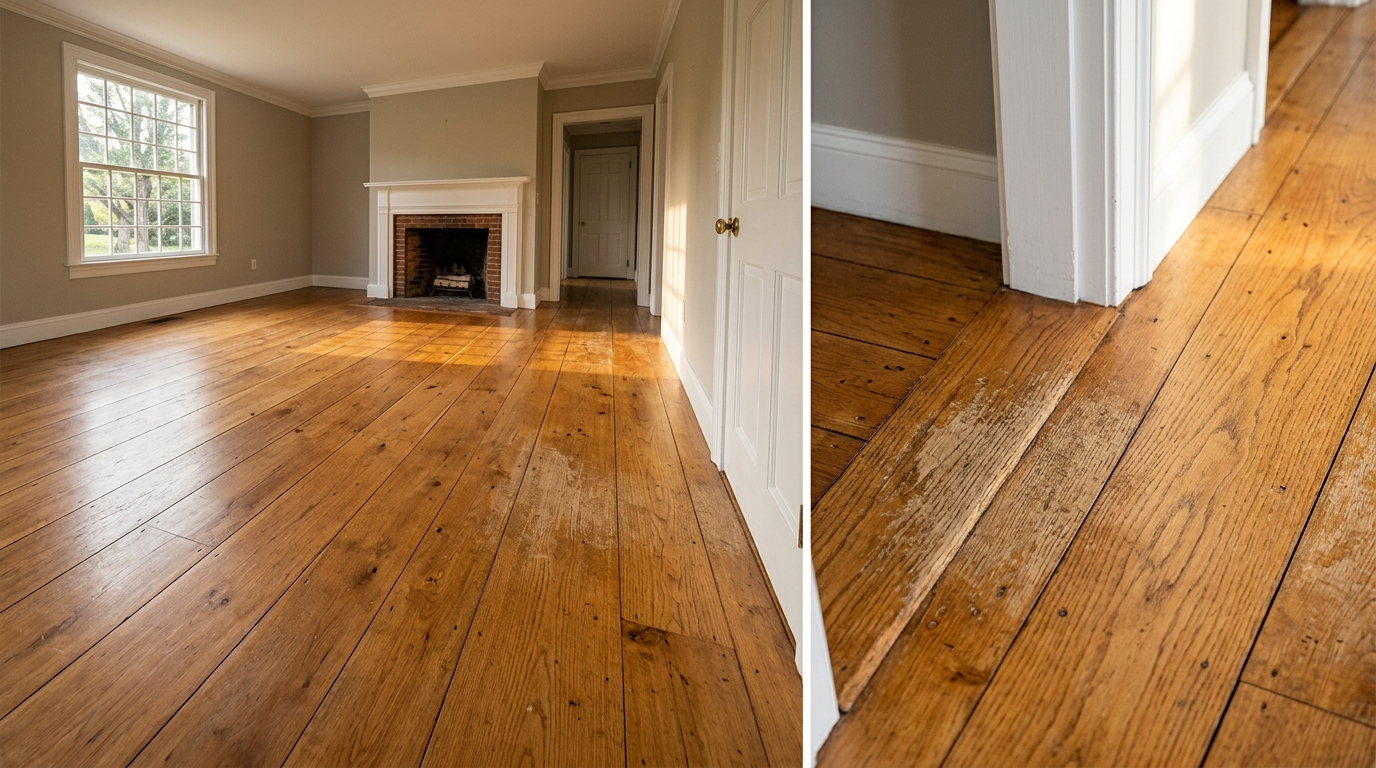
The pattern we encounter most often: a homeowner calls us in March reporting that floors refinished the previous November look "already worn." When we inspect them, the finish is not worn through to bare wood. The finish itself is intact but micro-scratched throughout, because it never fully hardened. The fix requires a full re-sand and re-coat. All of the cost, none of the benefit from the fall project.
September Is Not Just Slightly Better Than October
The difference between early September and late October is not marginal. It is the difference between a finish that cures correctly and one that does not.
In early September, Connecticut homes still carry late-summer humidity. Heating systems are off. Windows open at night. Temperatures stay consistent. A three-coat waterborne finish applied in the first two weeks of September has three to four weeks of stable curing conditions before the first cold snap arrives and the heat turns on. That is enough time for the finish to reach full hardness.
By mid-October, that window is closed for most homes. Heating season has started. The interior environment is no longer cooperative. A contractor who takes your job in late October without discussing these conditions is not doing you any favors, regardless of how low the quote is.
If your project is already past September, read the section below before assuming you have lost the year entirely.
Missing September Does Not Mean Waiting Until Spring
Missing September does not automatically mean waiting until next fall. It means adjusting either the product or the conditions.
Oil-modified finishes cure more slowly than waterborne but are less sensitive to low humidity. In a controlled environment, they are a viable cold-weather option. The tradeoff is longer dry time and stronger odor during application. For occupied homes, this creates a real disruption.
Environmental controls are the other lever. Running a humidifier in the weeks following refinishing can extend the safe curing window into October in some situations. This requires the homeowner to actively manage interior conditions. Most homeowners do not know to do this until after the damage is done.
Pre-finished hardwood sidesteps the curing problem entirely. Because factory-finished boards cure under UV light in a controlled manufacturing environment, installation does not depend on your home's humidity or temperature. If your project involves replacing boards rather than refinishing existing wood, pre-finished is worth a direct conversation during your estimate.
What It Actually Means When a Contractor Skips This Conversation
A contractor who schedules your October refinishing job without any conversation about curing conditions, heating systems, or finish selection is cutting a corner you will pay for by spring. This is not complicated chemistry. Any BONA Certified Craftsman understands it. Any NWFA-trained installer accounts for it in how they schedule work and what products they specify.
AGW has been doing hardwood floor refinishing in Connecticut since 1961. The credentials matter here: BONA Certified Craftsmen, NWFA trained installers, CT Home Improvement Contractor License #0630350, and 300-plus five-star reviews from homeowners in Guilford, Madison, Clinton, Essex, Old Lyme, Branford, Wallingford, and across New Haven and Middlesex Counties. That record exists because we have the same conversation about timing and conditions with every homeowner before a single machine gets loaded into a truck.
Questions Homeowners Ask Before Booking a Fall Refinishing Job
My contractor never mentioned curing time. Was my fall refinishing job already set up to fail?
Possibly, yes. Curing conditions are a basic part of finish selection and scheduling. A contractor who skips that conversation either does not know the chemistry or does not think it affects their reputation. It does not affect their reputation. It affects your floor. A BONA Certified contractor will always discuss finish type, room conditions, and timing before committing to a schedule. If that conversation never happened, it is worth having an in-person assessment done before another winter passes.
My floors were refinished three months ago and already look dull. Is this fixable without a full re-sand?
In some cases, a screen-and-recoat can improve appearance if the existing finish is still adhered and not peeling. But if the finish never cured properly, the new coat will bond to a compromised base. We have seen screen-and-recoat attempts on under-cured floors fail within weeks. A proper in-person assessment is the only honest answer. We offer free in-home estimates and will tell you exactly what you are working with.
I have two dogs. Does any of this change what finish I should use?
Yes, and it is worth a direct conversation. AGW offers a dog-friendly finish option specifically formulated to resist the scratching and moisture that pets bring daily. The application timing and curing requirements still apply. Knowing about your pets before we select a product is part of how we spec the right job the first time.
Does AGW serve Springfield, MA? I found you through Connecticut searches.
Yes. AGW recently expanded service to include Springfield, MA and surrounding areas. Call (203) 640-3106 to confirm coverage for your specific address.
Book the September Window Before It Closes
If it is still early September and you have been putting this off, stop putting it off. The floor that fails every Connecticut winter starts with a job scheduled too late, finished on a product that had no chance to cure. The floor that holds through five winters of snowboots, salt, and forced-air heat starts with a call made this week.
AGW Hardwood Floors LLC serves homeowners across Connecticut's shoreline, New Haven County, Middlesex County, and Springfield, MA. We bring wood samples to your home, walk you through every option without a sales pitch, and give you a free, detailed estimate with no obligation.
Call (203) 640-3106 or schedule your free in-home estimate today. September does not wait, and neither should you.
Contact Us
Check out other hardwood flooring blogs from AGW: