The Renovation Sequence Mistake That Costs Connecticut Homeowners Twice
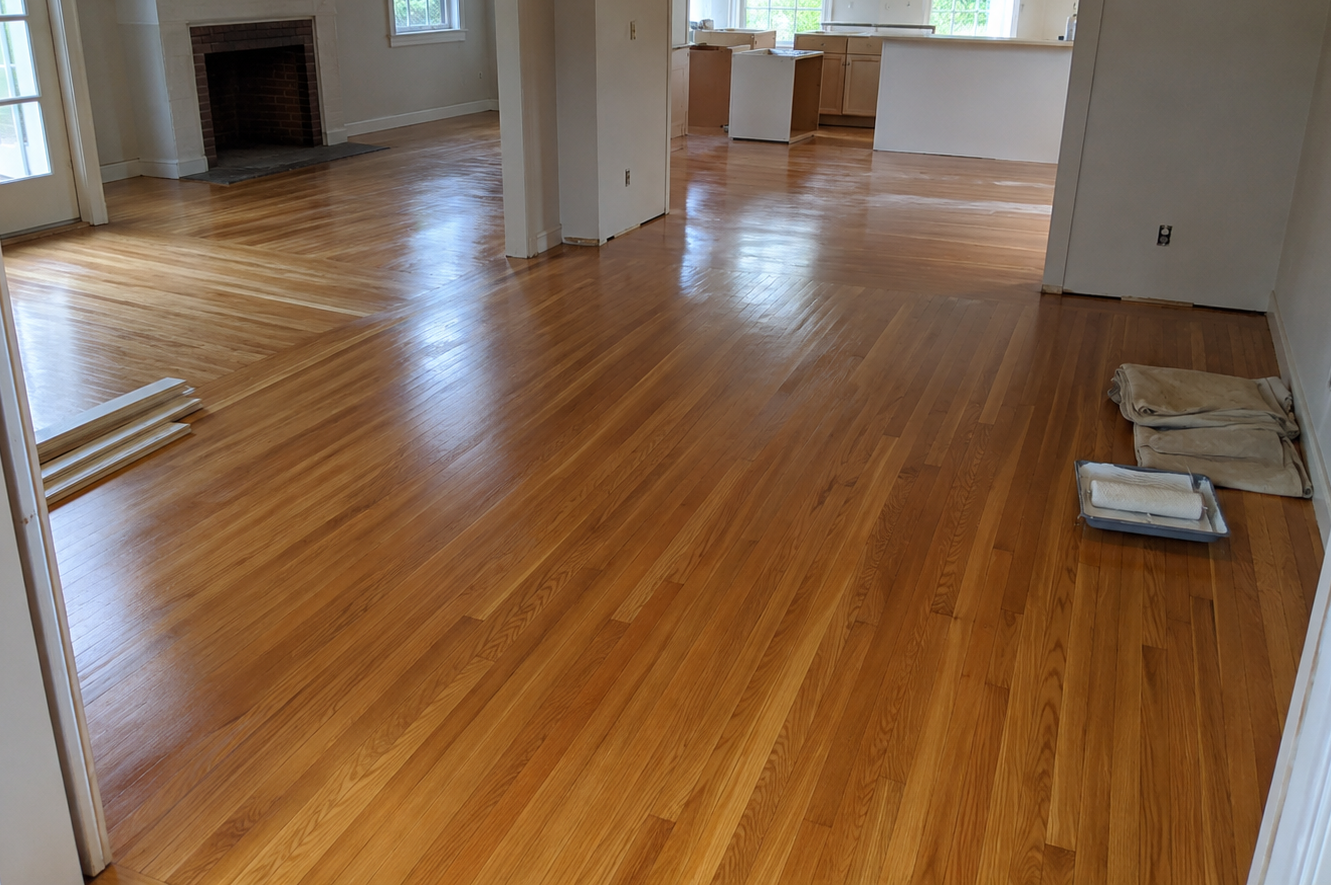
Most homeowners assume refinishing comes last. Finish the painting, install the new trim, update the kitchen, then call the floor guy. That sequence feels logical. It is also one of the most expensive mistakes we see Connecticut homeowners make every summer, and by the time they realize it, the damage is already done.
If you are planning hardwood floor refinishing in Connecticut this summer alongside other renovation work, the order you choose will determine whether you get a flawless result or spend money fixing preventable problems. This is not a minor scheduling preference. The wrong sequence can scratch a fresh finish, contaminate a new stain, or force you to pay for the same floor twice.
Refinishing After the Painters Leave Sounds Smart Until You See What They Leave Behind
Paint crews drip. Even careful ones. Roller spatter, overspray on trim, dried droplets on unprotected subfloor areas: all of it lands on whatever surface is exposed. If your hardwood floors have not been refinished yet, that contamination sands out cleanly during prep. If you refinished first and brought painters in afterward, every drip that lands on a cured finish creates a problem that requires spot repair at minimum, or a full re-coat at worst.
The same logic applies to trim and baseboard work. Carpenters drag tools, set ladders, and kneel on floors. A fresh polyurethane finish needs a minimum of 72 hours before it tolerates normal foot traffic, and several days before it handles the kind of abuse a trim install puts on a floor.
Here is what actually works: refinish floors after the major demolition and rough carpentry are done, but before any finish work like painting, trim installation, or cabinet installation begins.
Drywall Dust Is the Trade Contaminant Nobody Talks About
Homeowners consistently underestimate this one. Drywall dust is airborne for hours after the work stops. It settles into wet finish coats and cures into the surface permanently. You cannot sand it out without starting over.
We regularly see floors where a previous crew applied a beautiful stain and then allowed drywall work in adjacent rooms the same week. The finish looks cloudy or pitted near doorways and hallways. That cloudiness is not a product defect. It is contamination, and it is irreversible without a full re-sand.
AGW uses dustless hardwood floor refinishing equipment and environmentally safe finishes because finish-stage air quality matters. But even our process cannot protect a curing finish from another trade's dust if that trade is working in the same structure during the cure window. The cure window for most water-based finishes is 24 to 48 hours for light traffic and five to seven days for full hardness. Nothing that generates suspended particulate should happen inside the home during that window. Plan around it.
Kitchen Renovations Create a Specific Timing Problem
Kitchen renovations involve plumbing disconnection, appliance removal, subfloor exposure, and significant foot traffic in and out. Hardwood flooring adjacent to a kitchen renovation zone takes a beating during that process. Scratches from appliance dollies, water from disconnected lines, and adhesive residue from old flooring removal all affect the condition of adjacent hardwood before anyone picks up a sander.
Complete all kitchen rough work first: subfloor repairs, cabinet installation, plumbing rough-in. Then schedule the floor refinishing. This way the sanders can address any damage the kitchen demo caused, and the finish goes down over a clean, stable surface. Running the sequence in reverse means your refinisher is protecting a fresh finish while a kitchen crew is moving refrigerators six feet away.
One exception worth flagging: if you are doing hardwood floor installation in Connecticut that will transition into a kitchen renovation zone, coordinate with both contractors so the flooring installation and kitchen finish work happen in the same closing phase of the project. This protects both timelines.
Cabinet Installers and Fresh Floors Do Not Coexist
Cabinet installers set heavy boxes on the floor, drill, measure, and slide base units into position. All of it happens directly on whatever surface is underfoot. If that surface just received a fresh coat of finish, you are looking at deep scratches within the first hour of cabinet work.
Schedule cabinet installation before floor refinishing in any room where the two intersect. The refinisher then sands up to and under the cabinet edges and applies finish in a single continuous pass. Cleaner result, and the finish stays intact.
Questions Homeowners Ask Before They Book
We already painted the walls. Does that mean refinishing is off the table?
No, but it changes what you need to protect. We apply masking and floor protection during prep, and our equipment pulls dust rather than generating clouds of it. The risk runs the other direction: fresh refinishing can release odors that affect paint adhesion on walls if ventilation is insufficient. Plan for good airflow and confirm your paint is fully cured before we start, typically at least two weeks after application.
My contractor says he can sequence the trades so floor work fits in the middle. Is that realistic?
It depends on how tightly your contractor controls the schedule. A well-run general contractor can create a clean window for floor work. What actually happens on most jobs is that one trade runs long, the window compresses, and the flooring crew ends up working while another trade finishes nearby. Ask your contractor specifically who will be off-site completely during the 72-hour cure window. Not just who will try to stay out of the way.
If something goes wrong with the finish because another trade contaminated it, who pays to fix it?
This is the question nobody wants to answer until there is a problem. The honest answer: it depends on what you can prove and who you contracted with. If a painter drips on a fresh finish, your flooring contractor is not liable for the repair. If the flooring contractor started work knowing drywall was active in the next room, the responsibility is murkier. The cleanest protection is a written schedule that specifies the cure window and names which trades are off-site during it. We flag this on every job where other contractors are involved, because we have seen the argument play out. It is not one anyone wins cleanly.
We have a dog. Can we board her for just 24 hours, or does she need to stay out longer?
For standard water-based finishes, 48 to 72 hours is a safer window for pets. We offer a dog-friendly finish option that uses a formula gentler on paws and respiratory systems, and we will give you the exact re-entry timeline before we start. A quick online answer might say 24 hours. Our honest field answer: give it three days if you can.
Lock In Your Sequence Before You Book Any Other Trade
If you are managing a summer renovation in Guilford, Madison, Clinton, Essex, Old Lyme, or anywhere along Connecticut's shoreline, the conversation about floor timing needs to happen before you book any other trade, not after. We have worked alongside general contractors, kitchen designers, and painters across New Haven and Middlesex counties for over 60 years. The projects that go smoothly are the ones where everyone knows the sequence from day one.
AGW Hardwood Floors holds CT Home Improvement Contractors License #0630350. We are BONA Certified Craftsmen and trained through the National Wood Flooring Association. When you bring us in for a free in-home estimate, we will look at your renovation timeline alongside your floors and tell you exactly when to schedule us.
Call (203) 640-3106 or request your free in-home estimate today. We bring wood samples, walk every room, and give you a clear sequence before any work begins. More than 300 five-star reviews from Connecticut homeowners reflect what happens when the order is right from the start.
Contact Us
Check out other hardwood flooring blogs from AGW: