Your Dog Didn't Ruin Your Hardwood Floors. Here's How to Know for Sure.
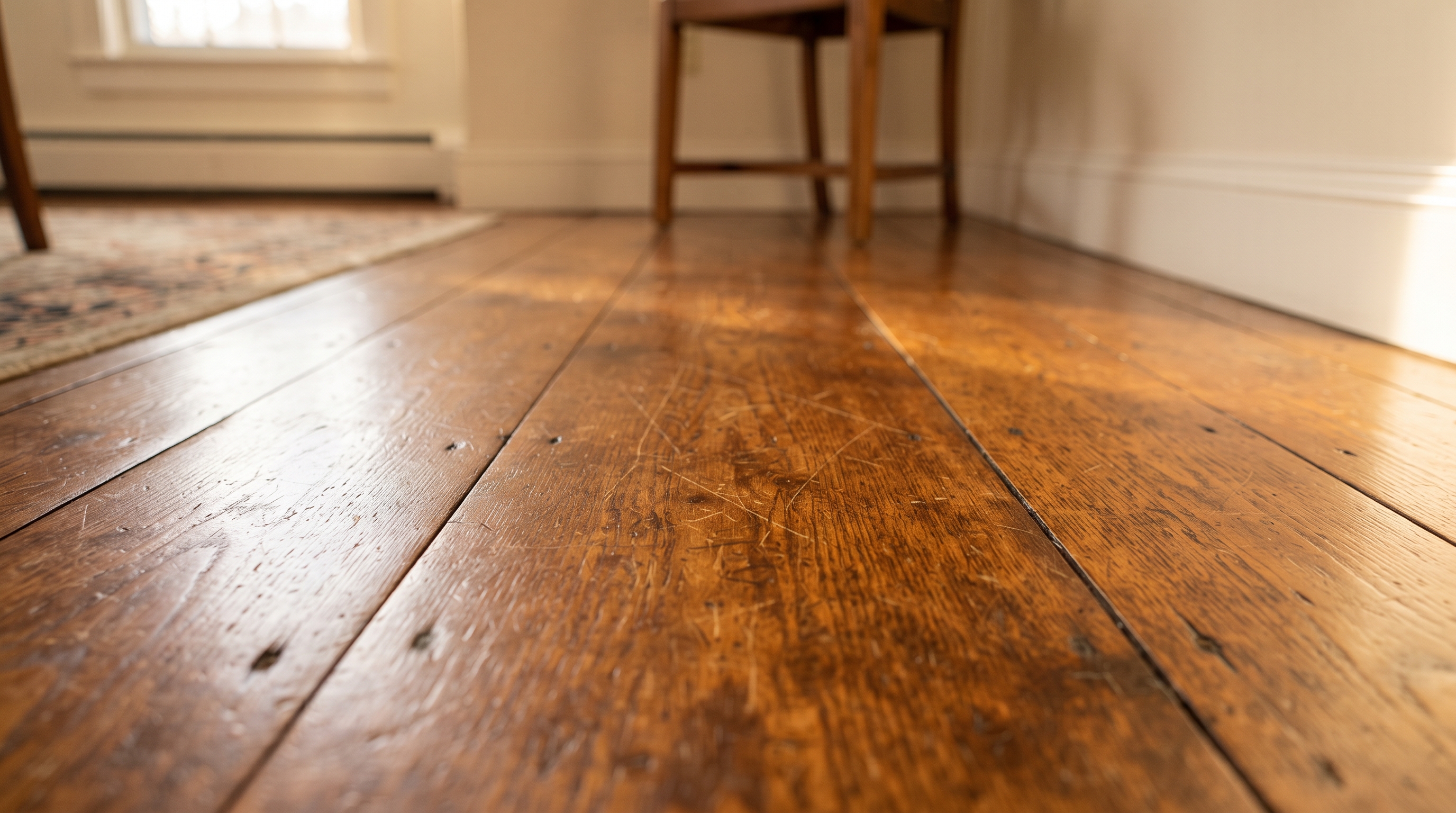
You're not imagining it. The floors looked fine two years ago, and now something is clearly wrong. The scratches near the back door make sense. The cloudy patches by the water bowl, the worn trail from the couch to the stairs, the spots that look almost gray in certain light? Those are less obvious. Most homeowners assume the worst when they see pet damage and start pricing out full replacement. In most cases, in Connecticut homes we work in, that's the wrong call.
If you've been searching for a dog-friendly hardwood floor finish in Connecticut, chances are you're past the planning stage. You already have the dog and the floors. Now you need to know what you're actually dealing with before you make any decisions.
Surface Damage vs. Wood Damage: The Question That Changes Everything
This is the question that determines whether refinishing fixes your problem or whether you're looking at something more serious.
Hardwood floors have layers. The finish coat sits on top, and that's the protective layer that takes the daily abuse. Below it is raw wood, which is a different story entirely.
Surface damage means the finish itself has failed. Scratches, cloudiness, worn-through sections, even light staining are all finish-level problems. A full refinish strips the old coat down, sands the surface, and applies new finish. Your floors look new again. The wood underneath was never compromised.
Wood damage is different. Deep gouges, permanent black staining, soft or spongy sections, boards that have cupped or warped from repeated moisture exposure reach into the wood itself. A water bowl that gets splashed, or a dog who comes in wet from rain every day for five years, will eventually get there. This is where refinishing alone isn't enough.
Most pet damage lives at the finish level. We see it constantly in homes across Madison, Guilford, and Clinton where families have had large dogs for a decade or more. Floors that look genuinely ruined from across the room often clean up completely once we get them under the sander.
What Each Type of Pet Damage Actually Looks Like
Knowing the category tells you how serious the situation is. Here's what we see most often.
Scratch patterns from nails look worse than they are. They're almost always surface-level. Run a fingernail across the scratch. If it doesn't catch, the wood itself isn't cut. Only the finish is.
Cloudy or white patches usually mean the finish has oxidized or micro-scratched into opacity. This is common in high-traffic paths. It looks like the wood is dying. It isn't.
Gray or dark staining near the water bowl or doorway is the one that genuinely concerns us. Gray color in the wood means moisture has penetrated past the finish and begun reacting with the wood's tannins. Depending on depth, this sometimes sands out. Sometimes it doesn't, and those boards need replacement.
Worn, bare-wood sections mean the finish was completely abraded away and the wood has been taking direct abuse without protection. These areas absorb moisture and stain unevenly, but bare wood can still be refinished. It just needs extra care during prep to ensure the new finish bonds evenly.
Soft spots or cupping are structural warnings. Press your palm firmly into any suspicious area. Solid wood should feel rigid. Any give in the board surface means moisture damage has reached the wood, and that's not something a refinish alone can fix.
Why Summer Is a Practical Window to Act
Refinishing in summer isn't just convenient. There are real practical reasons it works well for Connecticut homeowners. Humidity in the wood stabilizes during summer months, which means boards are less likely to move during and after the refinish process. For a deeper look at how seasonal timing affects refinishing outcomes, this guide on summer hardwood floor refinishing in Connecticut walks through what to expect.
If you're standing in your living room right now noticing the damage, you're in the right window to act before fall.
The Finish You Choose After Refinishing Changes Everything for Pet Owners
Once the old finish comes off and the surface is clean, finish selection matters more than most homeowners realize.
Oil-modified polyurethane was the standard for decades. It cures harder and holds up well against nail traffic. Water-based finishes dry faster and have lower odor, but formulations vary significantly in durability. Nail traffic on hardwood is a different kind of wear than foot traffic, and the finish needs to account for that.
We offer a dog-friendly finish option built for exactly this environment. Lower odor during application matters if you have pets in the house. Durability after curing matters even more. Understanding how different finish types protect wood gives you a better foundation for that conversation during your estimate.
Questions Pet Owners Ask Before They Commit
My floors are old and have never been refinished. Is there enough wood left to sand?
Solid hardwood floors can typically be refinished multiple times. The limiting factor is the thickness of wood above the tongue-and-groove joint. Most pre-1980s Connecticut homes have thick solid planks with plenty of material remaining. We check this during the estimate. It's not a guess. We measure it on-site.
Will the scratches come back just as fast after refinishing?
Yes, if nothing else changes. But with the right finish and basic habits, keeping nails trimmed, using area rugs in high-traffic zones, and placing a mat at every entry door, most pet households report the refinished floors holding up noticeably better for years. The finish we use for pet homes is a different specification than a standard residential coat.
Can't I just use one of those resurfacing kits from the hardware store?
Those products add a thin coat over an existing finish. They don't remove the oxidized, scratched-up layer underneath. They seal it in. The result looks better briefly, then worse than before, because the bond between the new coat and the degraded old one fails. We see this regularly. A professional screen-and-recoat is different, but it only works when the existing finish is structurally sound. If you're past that point, which most pet households are after several years, a full refinish is the right answer.
I'm embarrassed by how bad the floors look. Will you judge me for waiting this long?
No. We've walked into homes where the finish was gone entirely and the bare wood had been taking direct abuse for years. We've seen floors that looked like a total loss and refinished them back to something the homeowner was proud of. What matters is the condition of the wood itself, not how long the finish has been failing. If you waited, you're not alone. Call us, let us look at it, and we'll tell you honestly what's possible.
What about the dust? I can't have that with a dog in the house.
Our dustless refinishing system captures the debris at the source during sanding. It doesn't eliminate every particle, no system does, but it removes the bulk of what would otherwise settle across your home. Your dog can return to the space faster, and you don't spend a week cleaning.
Does the floor smell after refinishing?
The finishes we use are low-odor and environmentally safe. You'll notice something during application, but it dissipates quickly compared to older solvent-based products. Most families are back using the space within 24 to 48 hours after the final coat.
Your Floors Probably Aren't Ruined
That's the honest answer after 60-plus years of working in Connecticut homes. The damage looks dramatic, especially in rooms with good natural light. Most of it is finish failure, not wood failure. A BONA Certified refinish addresses the finish. The wood underneath is often in better shape than it appears.
AGW Hardwood Floors has served Connecticut's shoreline communities since 1961. We hold Connecticut Home Improvement Contractors License #0630350, and our refinishing crews are BONA Certified Craftsmen and NWFA trained. We've restored floors in Branford, Old Lyme, Essex, Wallingford, New Haven County, Middlesex County, and Springfield, MA, and we've seen pet damage in every variation.
If you're not sure what category your floors fall into, the free in-home estimate answers that question. We look at the floor, tell you what we see, and give you a straight recommendation. No pressure to move forward.
Call us at (203) 640-3106 or schedule your free estimate online. We'll bring wood samples, assess the actual condition of your floors, and tell you honestly whether refinishing solves it or whether something more is needed. You'll leave the conversation knowing exactly where you stand.
Contact Us
Check out other hardwood flooring blogs from AGW: