Flooring Installation Mistakes to Avoid Before They Ruin Your Hardwood Floors
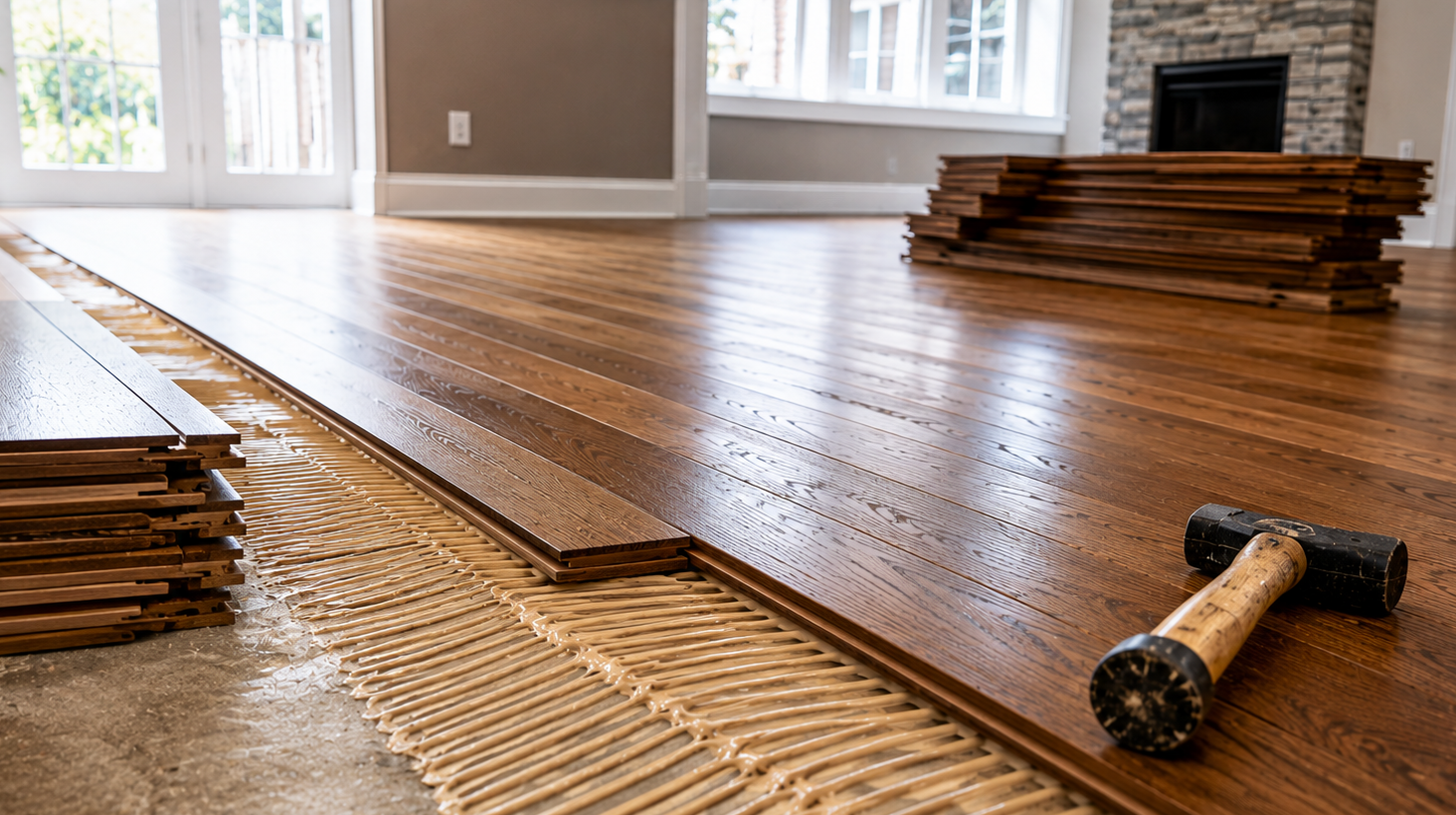
Hardwood flooring is one of the most durable and valuable upgrades a homeowner can invest in, but even premium materials can fail when installation mistakes happen during the early stages of the project. Problems like squeaking boards, visible gaps, uneven planks, buckling, and premature wear are often caused by poor installation practices rather than the flooring product itself. In many cases, these issues do not become obvious until months or even years later.
At AGW Hardwood Flooring, hardwood flooring installation is approached with the precision and craftsmanship required for long-term performance. Understanding the most common flooring installation mistakes can help homeowners avoid costly repairs and protect the appearance and value of their home.
Why Proper Hardwood Flooring Installation Matters
Hardwood flooring is constantly reacting to the environment around it. Temperature fluctuations, indoor humidity, subfloor conditions, and installation methods all influence how the floor performs over time. A properly installed floor should remain stable, visually consistent, and structurally sound for decades.
When shortcuts are taken during installation, homeowners may experience recurring issues that become increasingly expensive to correct. Floors can shift, separate, squeak, or develop moisture-related damage that affects both the flooring and the substructure beneath it.
Professional hardwood installation focuses on preparation, environmental control, precision layout planning, and proper finishing techniques rather than simply installing boards as quickly as possible.
Skipping Moisture Testing Before Hardwood Floor Installation
One of the most serious mistakes in hardwood flooring installation is failing to test moisture levels before installation begins. Hardwood naturally expands and contracts as humidity levels change throughout the year. If moisture conditions are ignored, flooring movement can become severe after installation.
Excess moisture in a concrete slab or wood subfloor may lead to:
- Cupping, crowning, or buckling
- Adhesive failure and board separation
- Mold growth beneath the flooring
- Premature finish deterioration
- Structural instability over time
Professional installers use moisture meters to evaluate both the subfloor and the hardwood materials before installation starts. In New England homes, where seasonal humidity shifts can be significant, moisture management becomes especially important for long-term floor stability.
Failing to Acclimate Hardwood Flooring Properly
Hardwood flooring needs time to adjust to the interior environment of the home before installation. Rushing this process is one of the most common causes of shrinking, expansion, and visible gapping after the floor is completed.
Acclimation allows the wood to stabilize according to the home's indoor temperature and humidity conditions. Different wood species and flooring products have different acclimation requirements, which is why experienced installers rely on moisture readings and environmental monitoring rather than arbitrary timelines.
Skipping proper acclimation can result in flooring movement that permanently affects both appearance and structural performance.
Ignoring Subfloor Preparation Creates Long-Term Problems
Even the highest-quality hardwood flooring cannot compensate for a poorly prepared subfloor. Subfloor issues often become the hidden cause behind squeaks, movement, soft spots, and uneven plank alignment.
Before installation begins, the subfloor should be evaluated for flatness, structural integrity, moisture damage, and fastening stability. Any deficiencies should be corrected before hardwood materials are installed.
Common subfloor preparation problems include:
- Uneven surfaces and height variations
- Loose or damaged plywood sections
- Moisture-damaged substrates
- Improper fastening and structural movement
- Debris left beneath the flooring system
At AGW Hardwood Flooring, subfloor preparation is treated as a foundational part of the installation process because long-term floor performance depends heavily on what lies beneath the finished surface.
Using the Wrong Installation Method for the Flooring Type
Different hardwood products require different installation systems. Solid hardwood, engineered hardwood, wide-plank flooring, and specialty species each respond differently to environmental conditions and structural movement.
Choosing the wrong installation method can create instability and shorten the life expectancy of the floor. Improper fastening schedules, incorrect adhesive selection, or using floating systems in unsuitable environments may all contribute to premature flooring failure.
Experienced hardwood professionals evaluate the home's structure, subfloor type, moisture conditions, and product specifications before determining the correct installation approach for the space.
Poor Layout Planning Reduces Visual Quality
Hardwood flooring installation is both a technical and visual craft. Poor planning during layout can create awkward board transitions, narrow sliver cuts along walls, inconsistent patterns, and visual imbalance throughout the home.
An experienced flooring installer carefully plans plank direction, room transitions, natural lighting orientation, and overall flow before installation begins. This planning becomes especially important in open-concept homes where flooring continuity affects the visual appearance of the entire living space.
Proper layout design helps create a refined, balanced appearance that complements the architecture of the home rather than distracting from it.
Rushing the Sanding and Finishing Process
For unfinished hardwood flooring, sanding and finishing are among the most important stages of the entire project. Mistakes during this phase can permanently affect the final appearance of the floor.
Uneven sanding patterns, visible scratches, stain inconsistencies, and dust contamination inside the finish coat are common signs of rushed or inexperienced work. Professional sanding requires careful sequencing, proper equipment, and controlled environmental conditions.
AGW Hardwood Flooring specializes in dustless refinishing systems that help maintain cleaner work environments while producing a more refined final result. Proper finishing techniques not only improve appearance but also contribute to the long-term durability of the flooring surface.
Choosing Flooring Materials Based Only on Appearance
Many homeowners focus entirely on color and style while overlooking important performance considerations. Certain hardwood species, finishes, and plank sizes behave differently depending on the home's lifestyle demands and environmental conditions.
For example, softer wood species may dent more easily in active households, while extremely dark finishes often reveal scratches and dust more visibly. Wide-plank flooring may also require stricter humidity control than narrower materials.
A knowledgeable hardwood flooring contractor helps homeowners balance aesthetics with durability, maintenance expectations, and long-term practicality.
Why Professional Hardwood Installation Delivers Better Long-Term Results
Professional hardwood installation involves much more than placing boards across a floor. Skilled installers understand moisture science, subfloor dynamics, expansion requirements, fastening systems, sanding procedures, and finish performance.
At AGW Hardwood Flooring, every project is approached with a commitment to craftsmanship, precision, and long-term durability. From premium hardwood installations to dustless refinishing and restoration work, AGW focuses on delivering floors that perform as beautifully as they look.
Homeowners who invest in professional installation often avoid the recurring repairs, instability, and cosmetic issues commonly associated with rushed or improperly managed flooring projects.
Frequently Asked Questions About Flooring Installation Mistakes
How long should hardwood flooring acclimate before installation?
The acclimation period varies depending on the product type, wood species, and indoor environmental conditions. Professional installers monitor moisture readings rather than relying solely on a fixed timeline.
Can hardwood flooring be installed over concrete?
Yes, but proper moisture mitigation systems and installation methods are essential. Engineered hardwood is commonly used for concrete slab installations.
Why do hardwood floors squeak after installation?
Squeaking is often caused by subfloor movement, improper fastening, uneven substrates, or structural shifting beneath the flooring system.
Is engineered hardwood more stable than solid hardwood?
Engineered hardwood generally offers greater dimensional stability in environments with fluctuating humidity because of its layered construction.
What is the biggest mistake homeowners make during flooring projects?
One of the biggest mistakes is hiring inexperienced installers who skip moisture testing, subfloor preparation, or proper acclimation procedures to reduce installation time and costs.
Protect Your Investment With Expert Hardwood Flooring Installation
Hardwood flooring should add beauty, durability, and long-term value to your home for generations. Avoiding common flooring installation mistakes starts with choosing experienced professionals who understand every phase of the process.
To learn more about premium hardwood floor installation, refinishing, and restoration services,
contact AGW Hardwood Flooring today and schedule a consultation with a team dedicated to exceptional craftsmanship and lasting results.
Contact Us
Check out other hardwood flooring blogs from AGW: