Spring Is the Season That Reveals How Well a Hardwood Floor Was Built
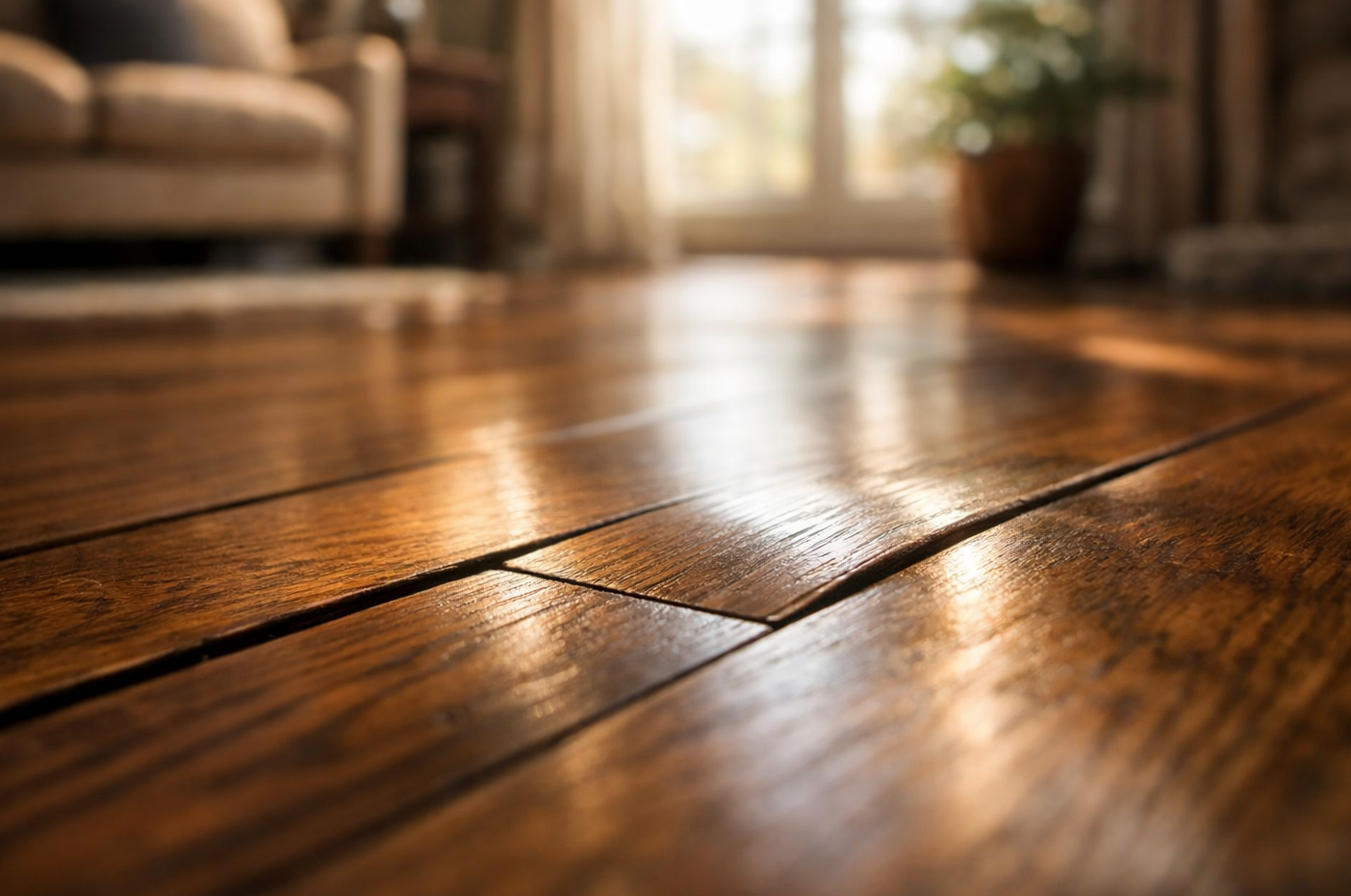
Early April is when many homeowners begin noticing small but meaningful changes in their hardwood floors. A floor that looked completely settled in February may now seem slightly different. Small gaps may start closing. Certain boards may feel tighter. In some homes, the edges of a few planks may lift just enough to catch the eye in the right light. These seasonal changes can be unsettling if you are not expecting them, but in many cases they are not signs of failure. They are signs that real wood is responding to the environment around it.
That responsiveness is part of what makes hardwood flooring so enduring and appealing. A well-made wood floor has warmth, depth, and character that manufactured surfaces often struggle to match. But real wood is not static. It moves with the home, and spring is one of the clearest times of year to see that movement begin. As winter dryness starts giving way to milder air and increasing moisture, hardwood floors begin adjusting right along with it.
For homeowners, the important question is not whether seasonal movement happens. It does. The real question is whether that movement is normal, manageable, and supported by proper craftsmanship. That is where experience matters.
Why Humidity Affects Hardwood Floors More Than Temperature Alone
When people talk about seasonal floor movement, they often focus on temperature first. Temperature does matter, but humidity is usually the stronger force. Wood naturally absorbs and releases moisture depending on the conditions inside the home. During winter, heating systems often dry indoor air significantly. As wood loses some of that moisture, boards can contract slightly. That is why small gaps sometimes appear between planks during the coldest months.
By early spring, that pattern often starts to reverse. Indoor humidity tends to rise as outdoor conditions soften, homes are aired out more often, and the heating system runs less aggressively. The wood begins absorbing moisture again. As it does, boards can expand. In a properly installed floor, that movement is usually modest and expected. But homeowners may still notice subtle visual or structural changes as the floor transitions.
This is one reason hardwood flooring requires a more thoughtful standard of care than synthetic materials. It is not fragile, but it is responsive. The floor reflects the living conditions of the house, and in many ways that is part of its value. It is a natural material performing exactly as nature designed it to.
What Homeowners Commonly Notice in Early Spring
Spring changes in hardwood flooring usually begin quietly. A homeowner may first notice that winter gaps are becoming less visible. Another may catch a slight shadow along the edge of a board and realize there is a small amount of cupping. Sometimes the floor sounds a little different underfoot as the boards adjust to a changing moisture balance. These are the kinds of details people start to pick up in April, especially after a long heating season.
A few changes are especially common during this time of year:
- Minor winter gaps beginning to close
- Slight cupping in isolated areas where moisture levels have shifted
- Changes in sound or feel as boards settle into spring conditions
Not every home will experience all of these. Some may show almost no visible change at all. That often depends on the stability of the indoor environment, the species of wood, the width of the planks, the quality of the installation, and whether the floor was properly acclimated before it was installed.
The key point is that movement alone is not a diagnosis. A floor can change slightly with the seasons and still be performing exactly as it should.
When Seasonal Movement Is Normal and When It Signals a Problem
One of the most valuable things a seasoned hardwood professional can offer is perspective. Homeowners often worry that any visible change means the floor is failing. In reality, a certain amount of expansion and contraction is normal in real wood flooring. A floor that never moved at all would be more surprising than one that shifted modestly with the seasons.
That said, there is a line between normal movement and a condition that deserves attention. If boards show severe cupping, consistent crowning, persistent buckling, or obvious moisture damage, the issue may go beyond ordinary seasonal adjustment. The same is true if movement is concentrated around leaks, wet basements, unconditioned crawl spaces, or major swings in indoor climate.
A well-trained eye can tell the difference between a floor responding naturally to spring and a floor reacting to an underlying moisture problem. That distinction matters because the wrong response can make things worse. Homeowners sometimes rush into repairs or refinishing when the floor really needs time to stabilize. In other cases, people ignore warning signs that should have been addressed earlier. Experience helps separate what is cosmetic and temporary from what is structural and urgent.
Why New England Homes Put Hardwood Floors to the Test
In New England, hardwood floors live through real seasonal contrast. Dry winter heat, damp spring transitions, humid summer stretches, and cold-weather return cycles all place demands on natural wood. That is one reason craftsmanship matters so much here. A hardwood floor in this region cannot just look good on day one. It has to be built and installed with long-term performance in mind.
Older homes add another layer of complexity. They often come with unique subfloor conditions, varying insulation quality, and indoor climate patterns that are less predictable than newer construction. Even beautiful historic homes can experience uneven humidity from room to room. An experienced hardwood company understands that flooring decisions must account for the whole house, not just the visible finish surface.
This is where refined, practical guidance makes a real difference. Homeowners do not just need installation. They need judgment. They need to know which materials make sense for their home, what seasonal behavior is realistic, and how to care for the floor without overcorrecting every time the weather changes.
What Professional Hardwood Service Looks Like in a Changing Season
Professional hardwood service starts long before the first board is installed or the first coat of finish is applied. It begins with understanding moisture conditions, measuring the space correctly, evaluating the subfloor, and allowing materials to acclimate appropriately. These are not minor technicalities. They are foundational decisions that affect how the floor behaves for years.
In a refinishing context, good service also means knowing when not to rush. If a floor is showing spring movement, an experienced professional will consider current moisture conditions before recommending a major corrective step. Refinishing, repairs, and board replacement all need to be timed and executed with respect for how wood behaves.
For AGW Hardwood Flooring, craftsmanship is not just about appearance. It is about building floors that hold their integrity across seasons. That includes premium installation practices, practical homeowner guidance, and dustless refinishing methods that respect both the home and the people living in it. A beautiful floor should also be a dependable one.
How Homeowners Can Help Hardwood Floors Stay Stable
Homeowners do not need to manage every minor fluctuation, but they can do a great deal to support long-term floor performance. The goal is not perfect stillness. The goal is reasonable stability.
The most effective habits are usually simple:
- Keep indoor humidity as consistent as possible throughout the year
- Address leaks, spills, and wet areas promptly
- Avoid dramatic swings in temperature and moisture inside the home
- Use professional guidance before assuming a changing floor needs repair
It also helps to remember that spring is a transitional season. Floors may need a little time to settle as the home moves out of winter conditions. Not every visible shift requires immediate action.
When in doubt, having the floor evaluated by a knowledgeable hardwood specialist is far better than guessing.
Who Should Pay Closest Attention to Spring Floor Movement
Some homeowners should be especially attentive this time of year. Households with wide-plank flooring often notice seasonal change more readily because wider boards tend to show movement more visibly. Owners of older homes may also see stronger reactions due to the way those homes manage air flow and moisture. Anyone who recently installed new hardwood should pay attention during the first major seasonal shift, since that period can reveal how well the floor was acclimated and installed.
This is also an important topic for homeowners planning refinishing work. Spring can be an excellent time to assess a floor’s condition, but it is best to do so with a clear understanding of whether what you are seeing is a finish issue, a moisture issue, or simply normal seasonal behavior.
Common Questions About Hardwood Floors in Spring
Do hardwood floors really expand in spring?
Yes. As indoor humidity rises after winter, hardwood can absorb moisture and expand slightly. That is a normal part of seasonal wood movement.
Are small gaps in winter always a problem?
No. Minor gaps during the dry heating season are often expected. Many begin to close naturally as humidity returns in spring.
Should cupping always be repaired right away?
Not necessarily. Mild cupping can be related to seasonal moisture conditions and may improve as the environment stabilizes. More severe or persistent cupping should be evaluated professionally.
Does refinishing stop seasonal movement?
No. Refinishing improves the surface and protects the wood, but it does not eliminate the natural expansion and contraction of hardwood.
Why AGW Hardwood Flooring Is the Right Guide for Long-Term Floor Performance
Hardwood flooring performs best when it is approached with patience, technical skill, and respect for the material itself. That is the kind of work AGW Hardwood Flooring is known for. With a legacy New England craftsmanship mindset, the focus is not just on making floors look exceptional today, but on helping them perform beautifully through the realities of every season.
That means giving homeowners honest guidance, installing with long-term stability in mind, and providing premium dustless refinishing and hardwood services rooted in experience. Seasonal movement is part of owning real wood floors. Knowing how to interpret it, plan for it, and respond appropriately is where true expertise shows.
Talk With AGW Hardwood Flooring Before Small Seasonal Changes Become Bigger Flooring Concerns
If your hardwood floors are showing new movement this spring, do not assume the worst and do not ignore it either. A knowledgeable evaluation can tell you whether what you are seeing is ordinary seasonal adjustment or a sign that the floor needs professional attention.
AGW Hardwood Flooring helps homeowners protect the value, beauty, and long-term performance of real wood floors with craftsmanship built for New England homes. If your floors are changing with the season and you want answers you can trust, now is the right time to start the conversation.
Contact Us
Check out other hardwood flooring blogs from AGW: