How to Protect Hardwood Floors from Summer Humidity
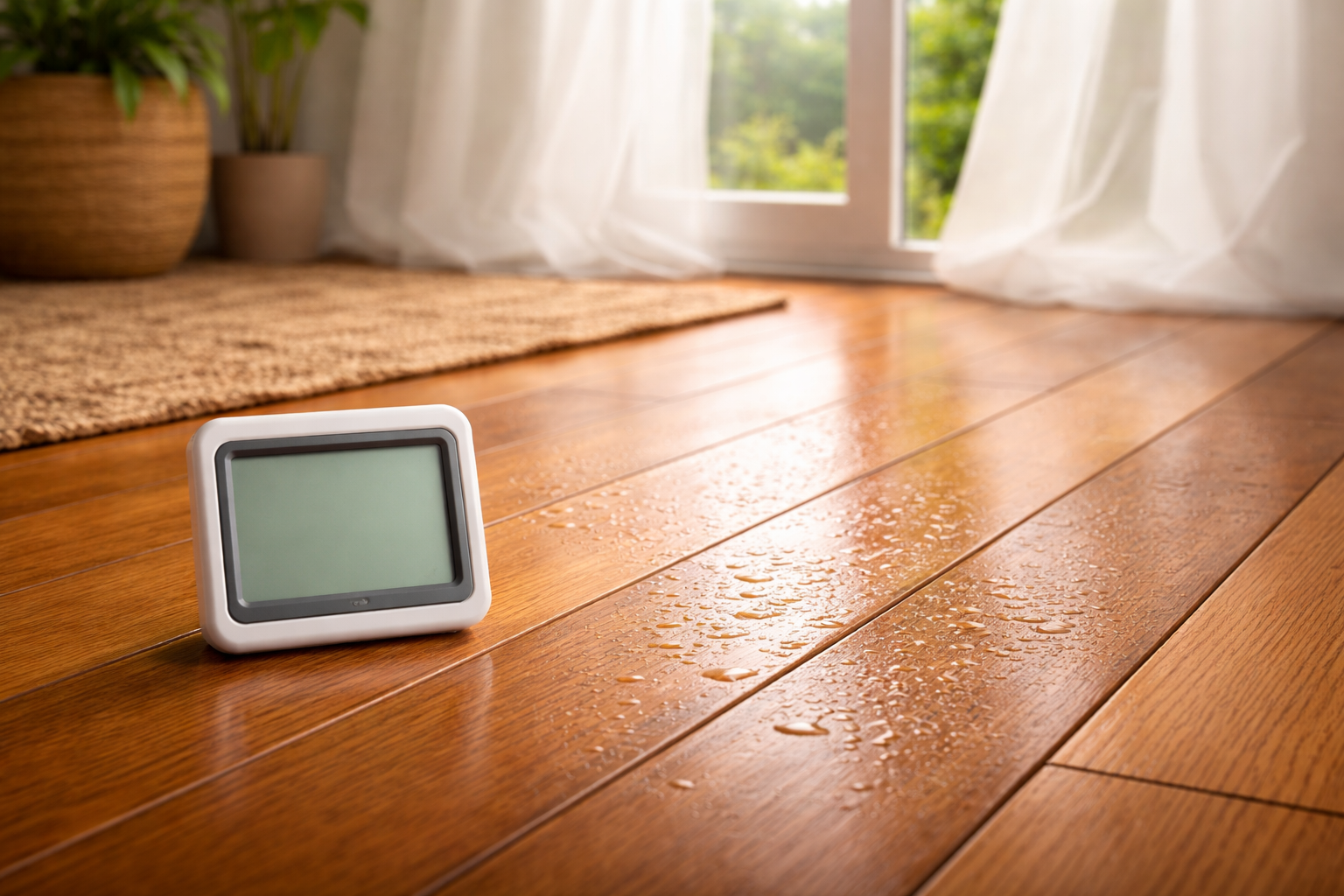
Hardwood floors are highly responsive to moisture in the air, which makes summer humidity one of the biggest seasonal threats to their stability and appearance. The most effective way to protect hardwood flooring during humid months is to maintain consistent indoor humidity levels between 35 percent and 55 percent, use proper ventilation and climate control, and ensure your floors are professionally finished and sealed.
Without these safeguards, even the highest-quality hardwood can expand, cup, or develop long-term structural issues.
Why Summer Humidity Poses a Risk to Hardwood Flooring
In New England and similar climates, summer brings a sharp rise in humidity levels. Wood naturally absorbs moisture from the air, causing it to expand. While this is a normal characteristic of hardwood, excessive or prolonged exposure creates stress within the boards.
Over time, this can lead to visible changes that impact both performance and aesthetics. Unlike surface-level damage, humidity-related issues often affect the internal structure of the wood, making early prevention critical.
Common Summer Humidity Problems in Hardwood Floors
When indoor humidity is not properly controlled, several issues can develop:
- Cupping - where the edges of floorboards rise higher than the center
- Crowning - the opposite effect, where the center becomes raised
- Gapping changes - seasonal gaps may close too tightly or shift unevenly
- Finish stress - protective coatings may dull, peel, or wear prematurely
Cupping is the most common issue homeowners notice first. It often starts subtly but can worsen quickly if moisture levels remain high.
Who Should Be Most Concerned About Humidity Damage
While all hardwood floors are affected by moisture to some degree, certain homes and conditions require extra attention:
- Homes without central air conditioning or dehumidification
- Properties near coastal areas or bodies of water
- Older homes with less insulation or ventilation control
- Wide-plank hardwood installations, which show movement more visibly
Even well-installed flooring can experience problems if environmental conditions are not controlled. Prevention is not about eliminating moisture entirely, but about maintaining balance.
How New England Summers Impact Indoor Floor Conditions
Summer humidity in the Northeast can fluctuate significantly from day to day. Rainstorms, heat waves, and overnight moisture all contribute to unstable indoor conditions.
Without climate control, indoor humidity can easily exceed 60 percent, which is well above the safe range for hardwood flooring. This is especially important in homes that rely on open windows for cooling, as outdoor air often carries more moisture than homeowners realize.
Consistent indoor conditions matter more than short-term fixes. A single humid week may not cause visible damage, but repeated cycles over a season can lead to lasting issues.
What Professional Hardwood Floor Protection Looks Like
At AGW Hardwood Flooring, protecting your floors from humidity starts with proper installation and continues through expert finishing and maintenance guidance.
Professional-grade finishes act as a barrier that slows moisture absorption, helping your floors respond more gradually to environmental changes. Dustless refinishing services also play a key role in maintaining that protective layer without introducing additional stress to the wood.
Equally important is ensuring your flooring system - including subfloor conditions and spacing - is installed with seasonal movement in mind. This level of craftsmanship reduces the risk of extreme expansion or contraction.
Actionable Steps to Prepare Your Hardwood Floors for Summer
There are several practical steps homeowners can take to reduce humidity-related risks:
- Use a dehumidifier to maintain indoor humidity between 35 percent and 55 percent
- Keep air conditioning running consistently during hot, humid periods
- Avoid leaving windows open on high-humidity days
- Use exhaust fans in kitchens and bathrooms to reduce moisture buildup
- Place moisture-absorbing mats near entryways during rainy weather
Consistency is key. Sudden swings in humidity are more damaging than stable, moderate conditions.
Why Homeowners Trust AGW Hardwood Flooring for Long-Term Floor Protection
AGW Hardwood Flooring brings a multi-generational approach to craftsmanship, combining time-tested techniques with modern dustless refinishing technology. Every project is handled with a focus on long-term durability, not just immediate appearance.
Homeowners benefit from tailored guidance that reflects real environmental conditions, not one-size-fits-all advice. From precision installation to protective finishing, every step is designed to help hardwood floors perform reliably through seasonal changes.
Schedule a Professional Evaluation Before Summer Peaks
If you want your hardwood floors to maintain their beauty and structural integrity through the summer, preparation should start now. Addressing humidity risks early can prevent costly repairs and extend the life of your flooring.
Contact AGW Hardwood Flooring today to schedule a professional evaluation and ensure your floors are fully prepared for the demands of summer.
Contact Us
Check out other hardwood flooring blogs from AGW: