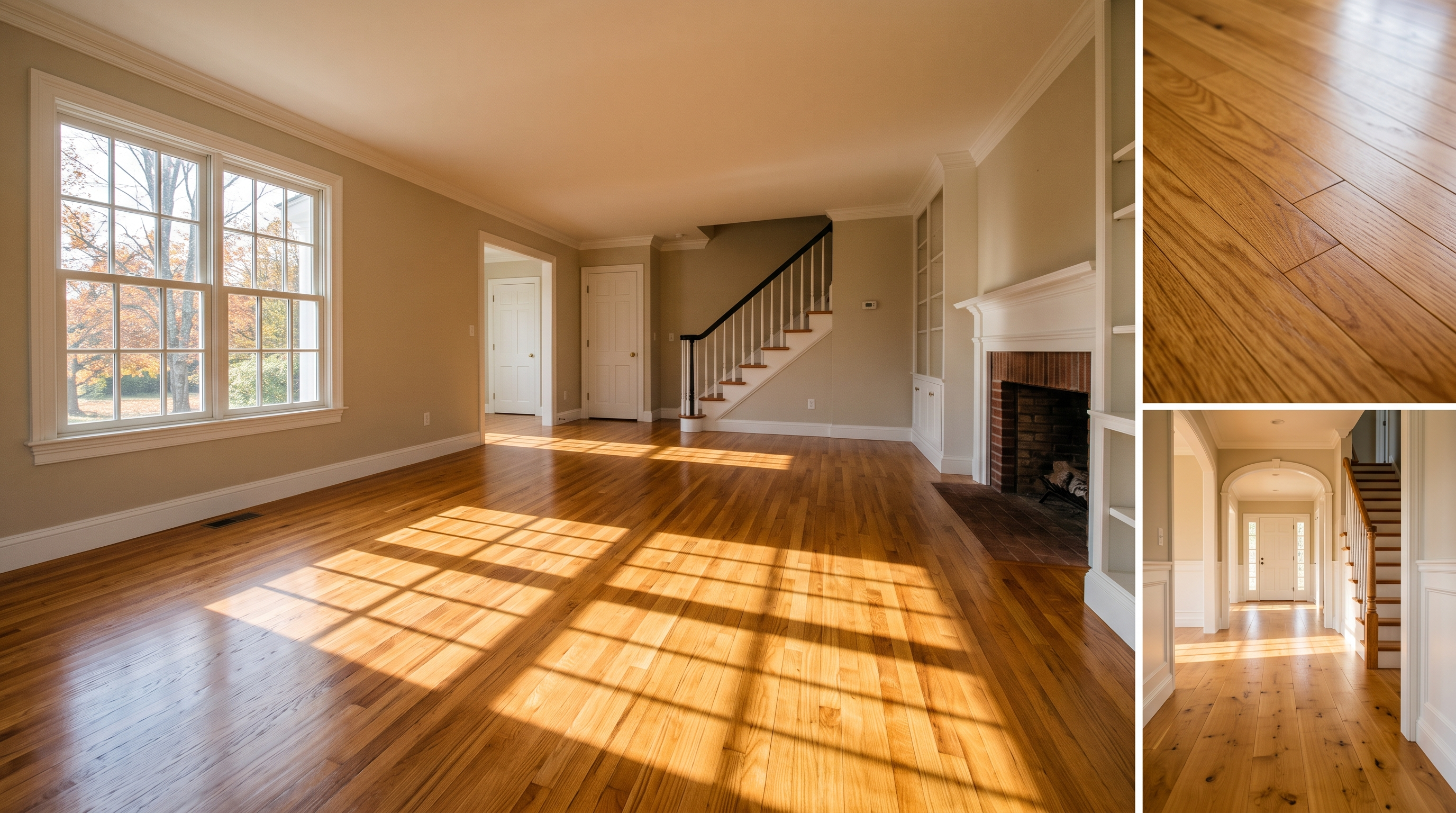
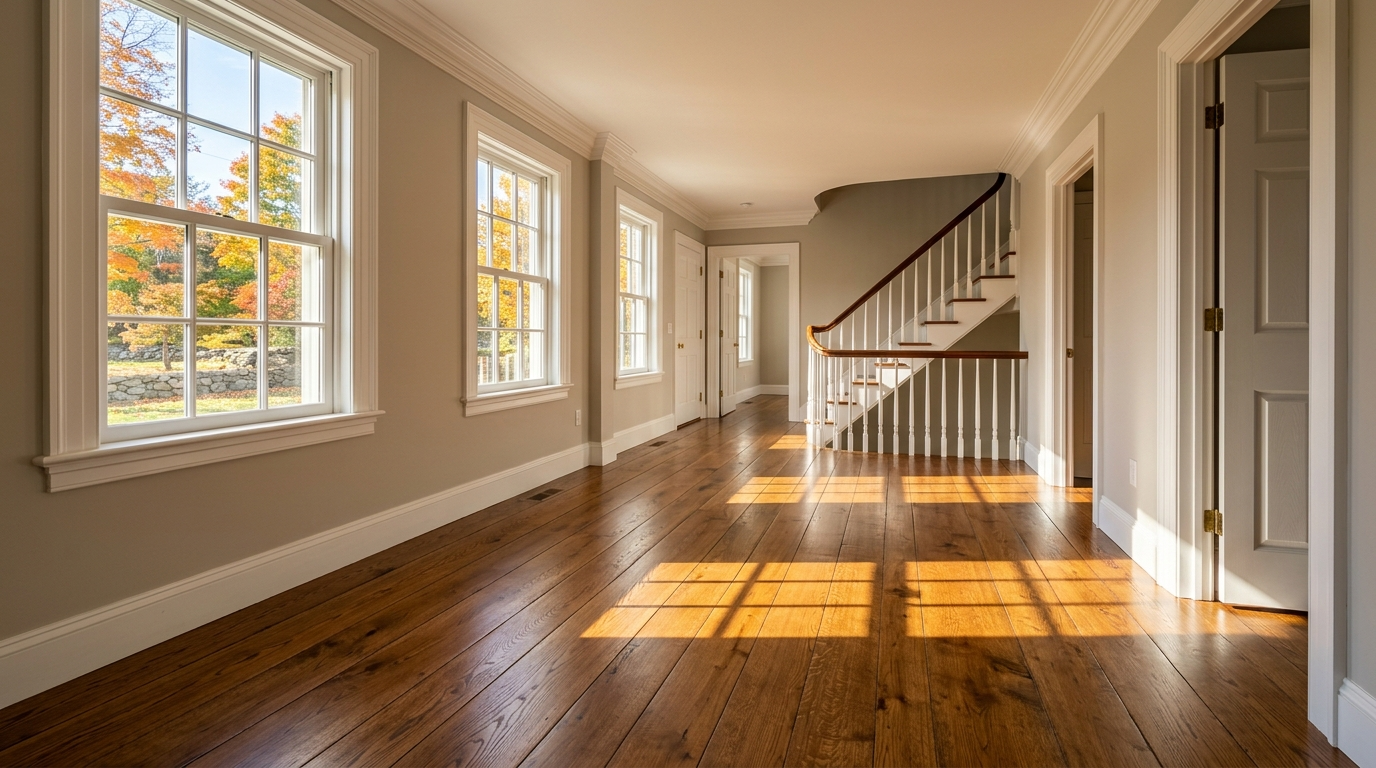
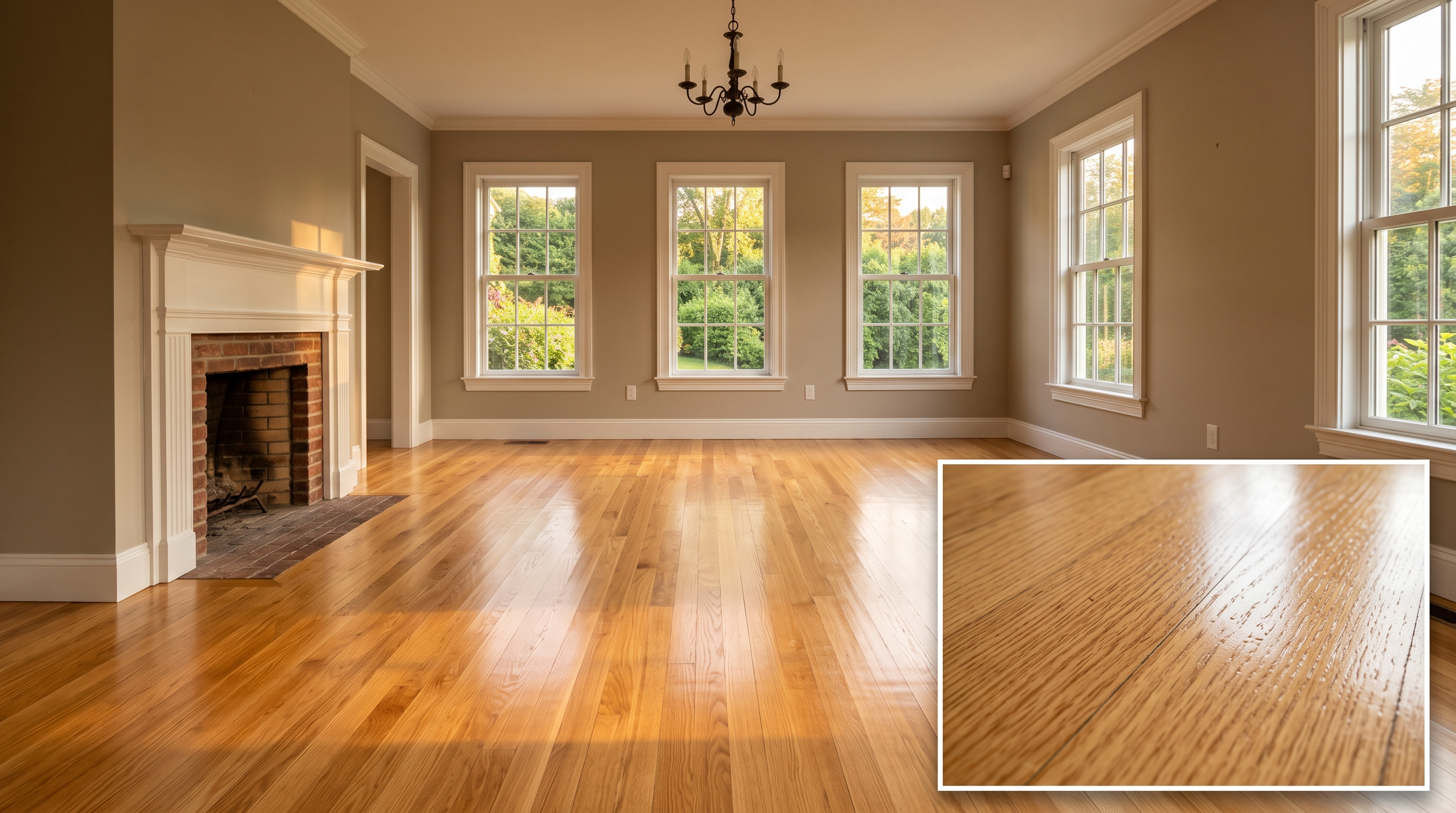
The Hidden Reason Fall Hardwood Floors Fail in Guilford CT
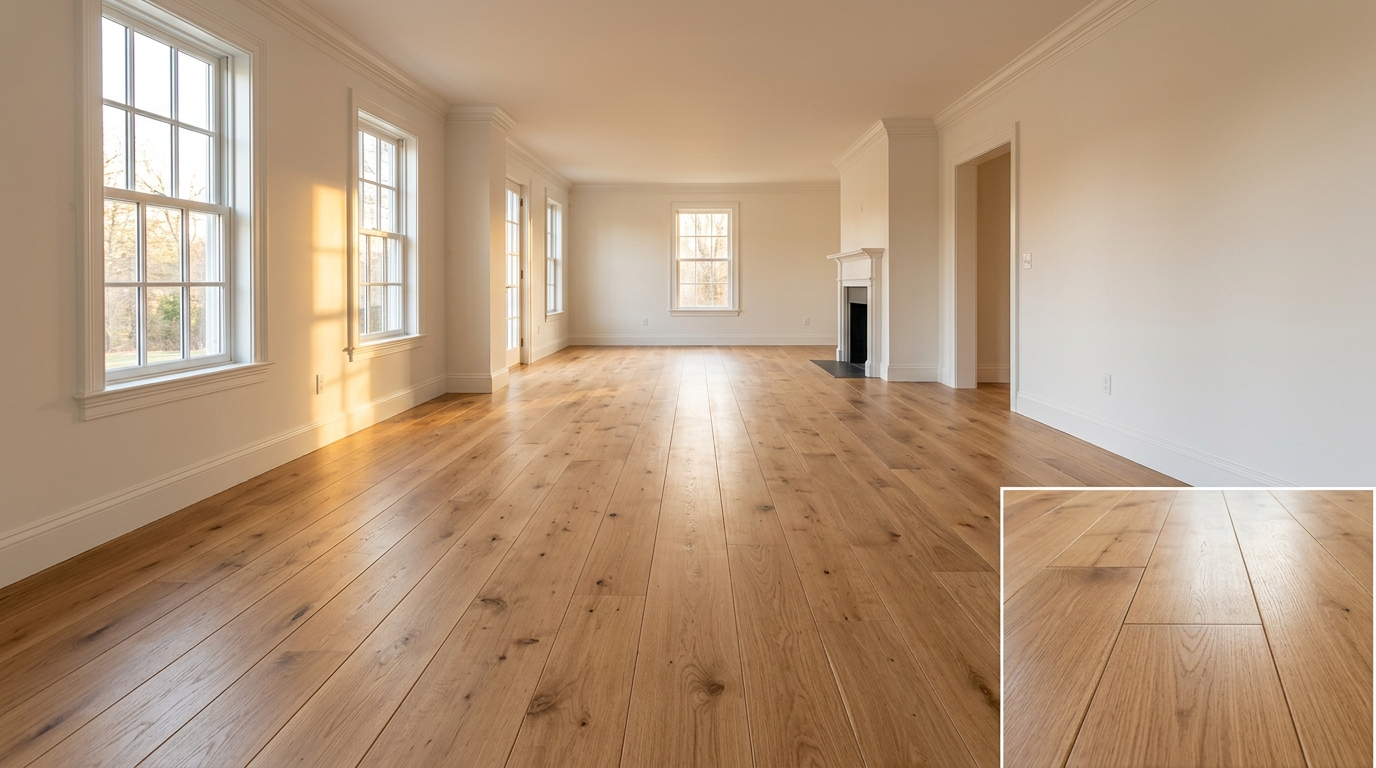
Most homeowners planning a fall installation are thinking about scheduling, budget, and how long they will be living around the disruption. Acclimation rarely makes the list. It sounds like a technicality, a few extra days added to a timeline for reasons no one fully explains. But when a furnace kicks on for the first time during or right after a hardwood floor installation in Guilford CT, acclimation stops being a formality and becomes the difference between a floor that holds and one that fails before the holidays.
The problem is not awareness. Homeowners researching hardwood floor installation in Guilford CT read that wood needs to acclimate before installation. They check that box. The contractor brings the lumber, lets it sit for a day or two, and the job proceeds. What they do not account for is what happens when the heat comes on and the indoor humidity collapses in a matter of hours.
Wood Fails When the Environment Changes Faster Than the Floor Can Adjust
Hardwood is hygroscopic. It absorbs and releases moisture constantly based on the relative humidity of the air around it. During summer and early fall in Connecticut, indoor humidity hovers anywhere from 50% to 70%. Once heating season starts, forced hot air systems can drive indoor humidity below 30%, sometimes lower in older homes with poor insulation.
A board that acclimated to 60% humidity in early October and was installed the following week is not ready for the 28% humidity of a heated Connecticut home in December. The wood shrinks. Gaps open between boards. In more severe cases, boards pull against their fasteners and the floor begins to creak or cup.
None of that is a defect in the material. It is a physics problem that proper acclimation prevents.
The part most contractors miss: the acclimation window matters as much as the duration. A board acclimated before the furnace runs for the first time has not acclimated to the conditions it will actually live in.
Fall Installations Carry More Risk Than Spring or Summer Jobs for One Specific Reason
Connecticut homes in October feel comfortable. Temperatures are mild, windows are open some days, and the indoor climate feels stable. That stability is temporary.
Spring installations benefit from a different dynamic. Humidity rises as the season progresses, which means wood is more likely to expand slightly rather than contract. A board installed with standard expansion gaps in May finds its equilibrium through summer and enters winter from a stable position. The same board installed in October, before the heating transition, is moving in the wrong direction almost immediately.
We regularly see fall installations that looked perfect at job completion show gap problems by February, specifically in homes where the furnace runs hard and no humidification system compensates for the lost moisture.
If you want to understand how seasonal humidity affects floors across the full calendar year, the post on what New England homeowners should know before summer humidity rises covers the opposing pressure your floor faces once winter ends.
The Acclimation Standard Most Contractors Follow Gets Heating Season Wrong
The industry guidance recommends 3 to 7 days depending on species and board width. That guidance assumes the installation environment represents the home's normal living conditions. In fall and early winter, it often does not.
A house where the thermostat sat at 60°F while the homeowners traveled, then got cranked to 70°F the day before installation begins, has not reached equilibrium. The subfloor, the walls, and the air itself are still catching up. Stacking lumber in that environment and calling it acclimated after 72 hours ignores what the floor will actually experience once the home returns to normal operation.
Wider boards are more sensitive to this problem. A 5-inch or 6-inch White Oak plank has significantly more surface area responding to humidity changes than a 2.25-inch strip floor. Species matter too. Red Oak moves more than Hard Maple. American Cherry is particularly sensitive. The right acclimation protocol is species-specific and conditions-specific, not calendar-specific. You can learn more about how species characteristics affect installation decisions in the most popular hardwood species in Connecticut homes.
What a Controlled Acclimation Process Actually Looks Like
Proper acclimation for a fall installation starts with the home's heating system running at normal operating temperature for at least a week before the wood arrives. The goal is to bring the home to the humidity level it will maintain through winter, not the ambient October conditions.
Calibrated moisture meter readings taken at delivery establish a baseline. The installer measures the subfloor moisture separately. The spread between the two numbers tells the story. If the subfloor reads 10% and the incoming lumber reads 7%, the wood needs more time. If they are within 2%, the floor is ready.
This is not guesswork. It is a measurable standard, and any installer who cannot give you those numbers should not be starting your job.
Boards should be stacked with stickers between courses to allow air circulation on all sides. A pile of lumber set flat on a concrete basement floor is not acclimating. It is just sitting there.
If your project touches other renovation phases, the Connecticut renovation sequence for hardwood refinishing covers how to sequence flooring work correctly among competing trades.
What Homeowners Ask Before Booking a Fall Installation
Can I install prefinished flooring and skip the acclimation concern?
Prefinished flooring still requires acclimation. The factory finish seals the surface, not the sides and ends of the board, so wood movement still occurs. That said, prefinished products often use engineered core constructions that are more dimensionally stable than solid hardwood. If your timeline is compressed and you are considering prefinished, that tradeoff is worth discussing. It does not eliminate the acclimation step, but it changes the risk profile.
My contractor mentioned acclimation after we already scheduled. Is that a warning sign?
Yes. Acclimation should come up in the first conversation, not as an afterthought after the start date is set. A contractor who surfaces this late is either disorganized or not planning to take it seriously. Adjusting the protocol is straightforward with enough lead time, so raise it now and see how they respond.
We are only doing one bedroom. Does acclimation still matter for a small job?
It matters more than most homeowners expect. A single bedroom with a heat register running all winter is one of the fastest environments for moisture loss in a home. The floor has nowhere to transition gradually. Acclimate it properly or you will see the gaps right where they are most visible.
Will my existing floors tell me anything about what to expect?
They will. If your existing hardwood shows visible gaps in February and closes up in July, your home has a wide seasonal swing. That swing is the range your new floor needs to survive. An installer who examines your existing floors before planning the acclimation protocol is doing the job correctly. One who does not look at them at all is skipping the most useful information available.
A Fall Installation Done Right Lasts Decades
AGW Hardwood Floors has been installing hardwood in Connecticut homes since 1961. We are BONA Certified Craftsmen and National Wood Flooring Association trained installers, and we hold Connecticut Home Improvement Contractors License #0630350. We serve Guilford, Madison, Clinton, Essex, Old Lyme, Branford, Wallingford, and surrounding communities throughout New Haven and Middlesex Counties, and we recently expanded service to Springfield, MA.
Fall installations are not a problem when they are planned correctly. The homeowners who call us in March upset about a gapping floor almost always share the same story: the contractor moved fast, nobody talked about acclimation, and the heating season did the rest.
We do not rush this step. We measure moisture levels, run the heat at normal operating conditions before wood arrives, and tell you exactly what we are seeing and why. If a job needs more time before we can start, we say so before the floor goes down, not after.
Call (203) 640-3106 or schedule a free in-home estimate. We bring wood samples to your home, assess your subfloor conditions, and give you a clear timeline that accounts for heating season. You will know what to expect before any work begins. No surprises in February.
Contact Us
Check out other hardwood flooring blogs from AGW: