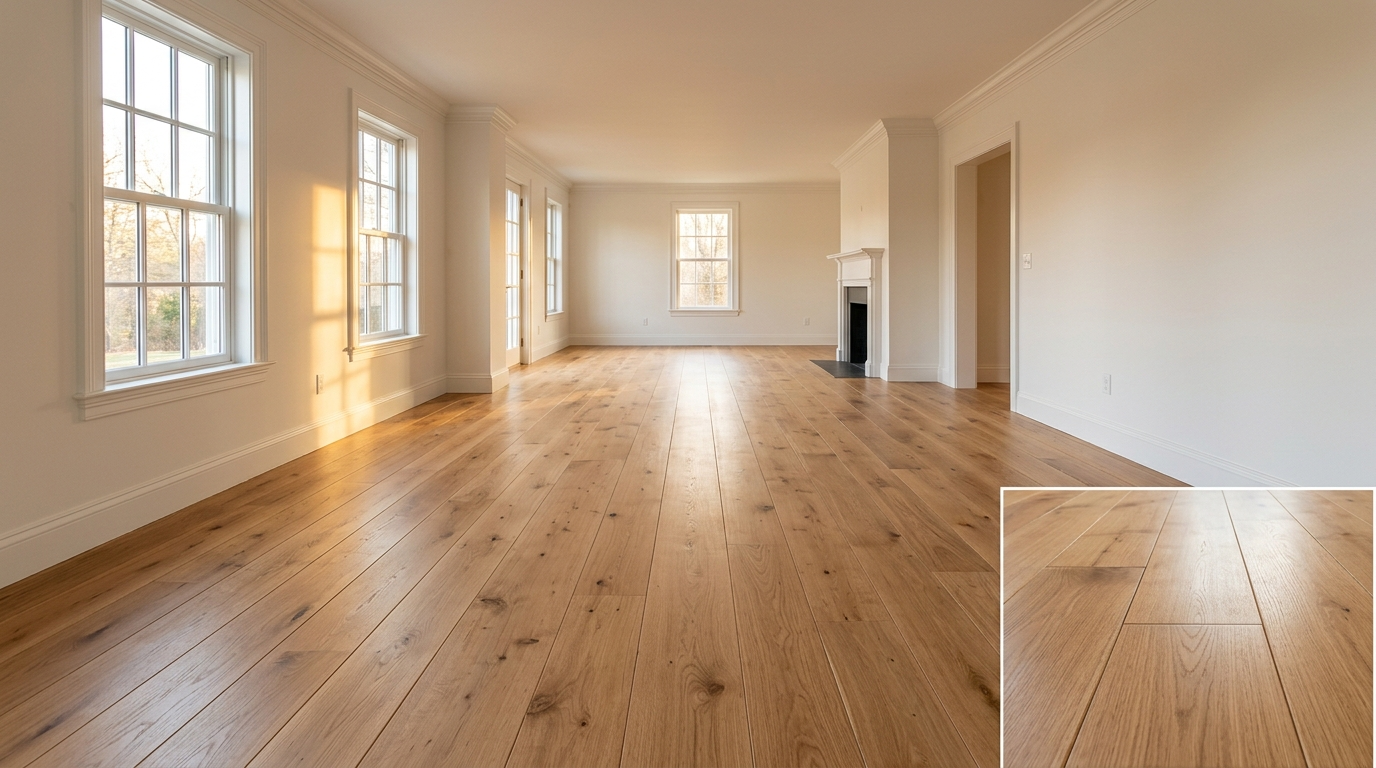
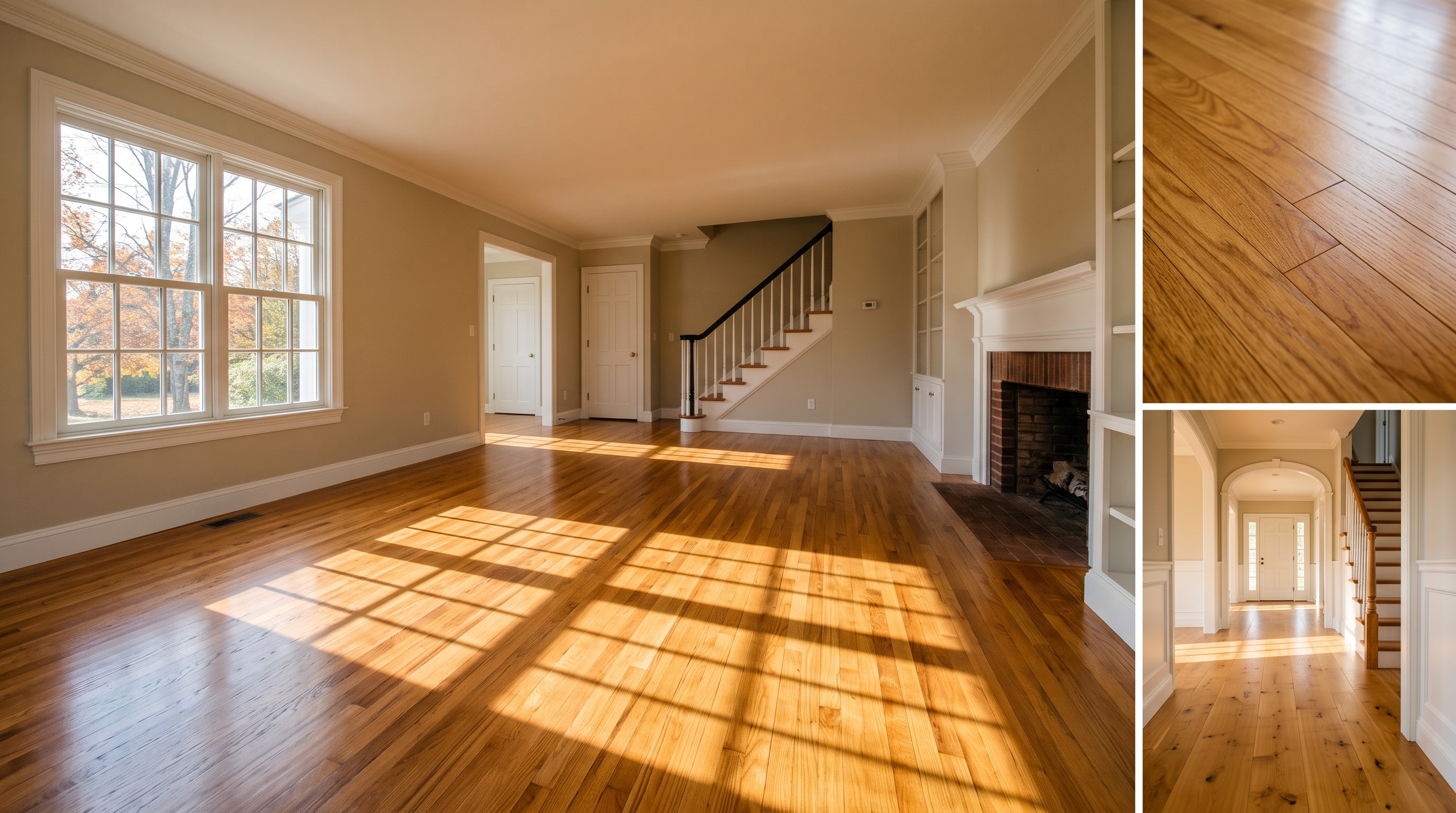
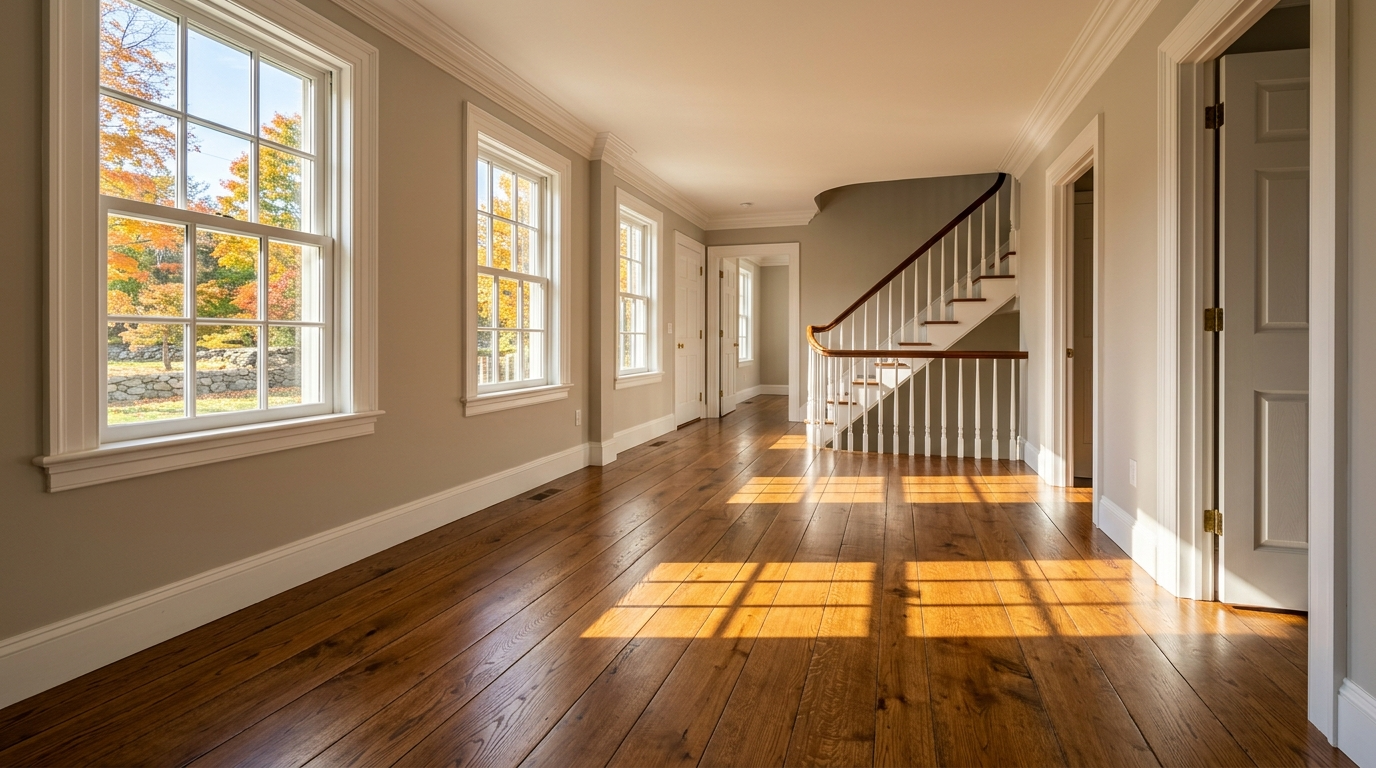
When Your Furnace Turns On, Your Hardwood Floors Start Losing the Fight
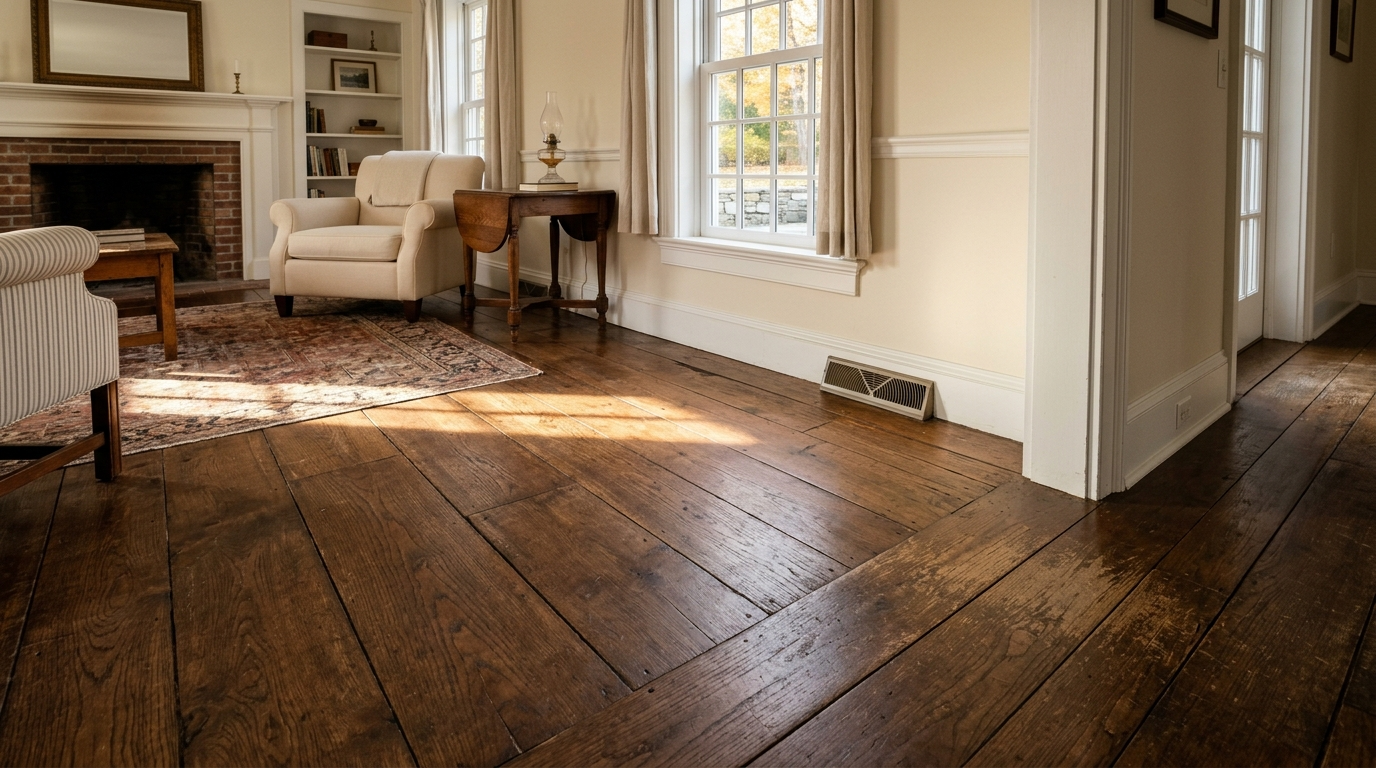
Most homeowners spend the summer worrying about humidity swelling their hardwood floors. That concern is valid, but it misses the other half of the story. The moment you turn on forced-air heat in October, your floors face a threat that is faster, less visible, and far more damaging to an unprotected surface. If your hardwood floor refinishing Connecticut window closes before winter, you will be dealing with a much harder job in the spring.
That shift from humid summer air to dry heated air is not gradual. In Connecticut homes along the shoreline and inland towns like Wallingford and Guilford, relative humidity can drop from 60 percent in August to below 30 percent by November once the furnace runs consistently. Wood responds to that change immediately. It contracts. And if the finish on your floors is worn, thin, or absent entirely, there is nothing between that wood and the dry air.
Worn Finish Means the Wood Is Exposed
A proper polyurethane or oil finish does two things at once. It protects the surface from abrasion and foot traffic, and it controls the rate at which moisture leaves the wood. When that finish wears through, the wood loses that protection on both fronts. Scuff zones near doorways, high-traffic hallways, and pet paths are often the first places where finish wears to bare wood. Most homeowners mistake those dull patches for cosmetic wear. They are actually exposure points.
Once the heating season begins, bare or thin-finish areas dry out faster than the rest of the board. That uneven drying creates tension across the wood fiber. The result shows up as fine surface checking: tiny cracks running with the grain that were not there in September. These are not seasonal cracks from normal wood movement. They are stress fractures in wood that dried too fast without a finish to slow the process.
Once you understand what the finish is actually doing, the consequences of letting the heating season arrive with worn floors become a lot clearer.
Forced-Air Heat Turns a Cosmetic Problem Into a Structural One
Summer humidity expands wood fibers. That expansion compresses boards together and can cause slight cupping. When fall arrives and heat runs, that process reverses. The wood contracts, the boards pull back, and gaps open between them. On a floor with a solid, intact finish, this movement is normal and manageable.
On a floor where the finish is worn or cracked, the wood dries from the top surface down unevenly. The top of the board dries faster than the interior of the plank. That differential creates the surface checking described above. Once those micro-cracks appear, they trap dirt and grit. Every time someone walks across the floor, that grit acts like sandpaper on the raw wood at the bottom of the crack. By December, what started as a cosmetic issue becomes structural wear in the wood itself.
We regularly see floors in Clinton, Madison, and Essex homes where a homeowner waited through October to schedule refinishing, and by the time we arrived, the surface cracks had already filled with embedded debris. Sanding through that requires more aggressive abrasive passes, which means removing more wood from planks that may already be thin from previous refinishing cycles.
Why November Refinishing Rarely Goes as Planned
Refinishing hardwood floors is not just about sanding and applying finish. The finish needs to cure. Water-based finishes cure best between 60 and 80 degrees Fahrenheit at moderate humidity. Oil-based finishes require similar conditions. When interior humidity drops below 35 percent because the furnace runs constantly, curing slows and the finish surface can develop a milky haze or an uneven sheen. That is not a defective product. It is a chemistry problem caused by the wrong environment.
In Connecticut, the practical window for refinishing closes in late October for most homes without climate control. Homeowners who book in September and early October get the cure conditions they need. Homeowners who wait until November are often dealing with a heated interior that is too dry, a contractor who may try to rush the process, and a result that does not hold the way it should.
What Homeowners Ask Before They Book Fall Refinishing
My floors look fine in certain light but dull and scratchy in others. Do I actually need refinishing, or just cleaning?
That angle-dependent dullness is one of the clearest signs the finish is nearly gone. A healthy finish reflects light consistently from most angles. When finish wears through, the wood surface scatters light rather than reflecting it, and you see that as a dull patch. Cleaning will not restore a finish that is no longer there. If you see it in certain light, the finish is already gone in those spots. Refinishing is the only fix.
Can I wait until spring to avoid the disruption?
You can wait, but you should understand what waiting costs. Every heating season without a finish accelerates the wear described above. Spring refinishing is possible, but you are starting it with wood that has already dried through a full winter without protection. On a floor with any existing micro-cracking, spring sanding takes longer and goes deeper. The disruption may actually be greater, not less.
Does dustless refinishing actually mean no dust in the house?
Our dustless system captures the overwhelming majority of sanding dust at the source. It is not perfectly dust-free the way a clean room is sterile, but it is dramatically cleaner than traditional sanding. You will not need to cover furniture in other rooms or deep clean the house after we leave. That is what we mean when we say dustless.
I have a dog. Does that change what finish I should use?
Yes, and this matters more than most homeowners expect. We offer a dog-friendly finish option that resists the surface scratching that comes from pet nails. Pets also concentrate wear in specific areas, which accelerates finish breakdown in exactly the spots that become exposed to dry heat first. If you have a dog, mention it when you call. It changes the product recommendation.
What if my floors have already been refinished two or three times? Is there a point where it is too late?
This is the question worth asking before you find out the hard way. Each refinishing cycle removes wood. Solid hardwood can typically handle four to six full sand-and-refinish cycles depending on the plank thickness, but that range shrinks fast if previous work was done aggressively or if surface cracks have been allowed to deepen over multiple heating seasons. We assess plank thickness during every estimate. If a floor is getting close to its limit, we tell you, and we talk through what your options are at that point, including prefinished hardwood installation as a replacement path.
Is fall refinishing more expensive than summer?
No. Our pricing reflects the scope of work, not the season. What changes in fall is scheduling availability. September and early October fill up fast. Call early if you want to lock in a date before the cure window narrows.
Act Before the Furnace Becomes Your Floors' Biggest Problem
AGW Hardwood Floors LLC has been refinishing floors in Connecticut since 1961. We are BONA Certified Craftsmen and NWFA trained installers. We hold Connecticut Home Improvement Contractors License #0630350, and we serve homeowners throughout New Haven County, Middlesex County, and the shoreline towns from Branford to Old Lyme.
If your floors are dull, rough, or showing small cracks near doorways and high-traffic areas, the heating season is about to make that worse. The window to refinish properly and cure correctly is open right now. By late November, it is effectively closed until spring.
Call (203) 640-3106 or schedule a free in-home estimate. We bring wood samples, give you a straight assessment of what your floors need, walk you through the process, and tell you exactly what it will cost. No pressure. No vague quotes. You leave the conversation knowing where your floors stand and what it takes to fix them.
The furnace is coming on. Get ahead of it.
Contact Us
Check out other hardwood flooring blogs from AGW: